

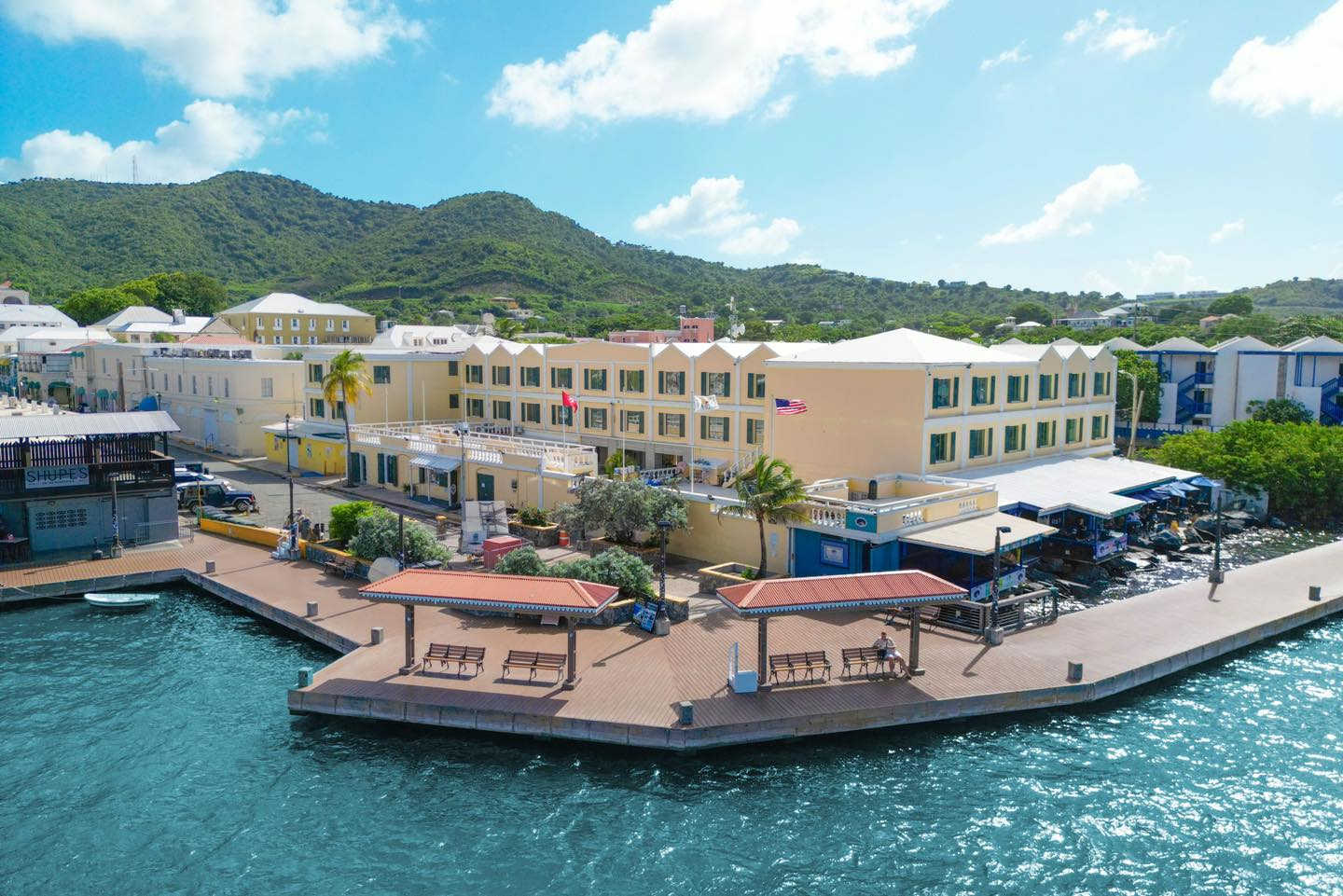
The Caravelle Hotel & Casino.
The Caravelle Group is opposing the Bryan administration’s proposed legislation that would allow Southland Gaming/SGVI to operate video lottery terminals at the Randall “Doc” James Racetrack on St. Croix, arguing that the plan could harm existing businesses, jobs, and the island’s gaming and tourism economy.

In a letter addressed to Governor Albert Bryan Jr., the group said it supports the reopening and revitalization of the racetrack, but objects to the gaming structure attached to the administration’s latest proposal.
“We respectfully write to express our opposition to the proposed legislation that would allow Southland Gaming to operate video lottery terminals (VLTs) at the Randall “Doc” James Racetrack on St. Croix,” the Caravelle Group wrote.
The group said it “strongly support[s] the reopening and revitalization of the racetrack” and recognizes the historic, cultural, and economic importance of horse racing to the territory. It also said the sport can again become “a positive community and tourism asset for St. Croix.” However, Caravelle argued that the proposed legislation could negatively affect existing businesses, jobs, and the long-term stability of St. Croix’s gaming and tourism economy.
The letter lists several concerns, including potential job losses in the existing casino, hotel, restaurant, and tourism industries if gaming revenue shifts away from the current resort-based model. Caravelle also warned that the proposal could circumvent the Casino Control Commission by placing casino-style gaming under what it described as a separate and less comprehensive regulatory framework.
The group further objected to what it characterized as unfair tax and operational advantages for Southland/SGVI that are not available to existing local businesses operating under full regulatory and tax obligations. It also raised concerns about the use of public assets and funding to support private gaming expansion without clear guarantees of broader public benefit, transparency, or accountability.
Caravelle also criticized a revenue allocation structure that it said appears heavily weighted toward racing interests, with limited reinvestment directed toward broader community priorities and infrastructure.
“St. Croix’s existing gaming framework was designed to support tourism development, job creation, and responsible gaming oversight,” the group wrote. “We believe the racetrack can and should be redeveloped in a way that complements these goals rather than undermines them.”
“We respectfully urge careful reconsideration of this legislation and its potential long-term consequences for the economy and workforce of St. Croix,” the letter added.
The opposition is notable because Caravelle is not a detached observer in the territory’s gaming and racetrack history. VIGL Operations, LLC, which previously held the government agreement to renovate and operate both the Clinton E. Phipps Racetrack on St. Thomas and the Randall “Doc” James Racetrack on St. Croix, is the owner of Caravelle Hotels & Casino.
VIGL operates the casino at the Caravelle Hotel and Casino in downtown Christiansted. In 2016, the Casino Control Commission approved a temporary license for VIGL Operations, LLC to run a slot machine casino at Caravelle Hotel in downtown Christiansted. In 2017, VIGL announced the acquisition of the King Christian Hotel and Company House Hotel, expanding its Christiansted hospitality portfolio.
That background places Caravelle’s objection within a broader fight over St. Croix’s gaming landscape. The group is warning that Southland’s proposed authority to operate VLTs at the racetrack could shift revenue away from existing businesses, while the Bryan administration has argued that expanded gaming is the mechanism that would allow the racetrack to be rebuilt without additional public spending.
The current dispute follows years of failed efforts to bring the Randall “Doc” James Racetrack back into operation. The earlier VIGL agreement, announced under the Mapp administration, was intended to rebuild both the St. Croix and St. Thomas racetracks. The agreement called for significant private investment and was promoted as a way to revive horse racing in the Virgin Islands.
Instead, the process became bogged down by court disputes, delays, and changing arrangements. St. Croix’s racetrack was demolished under the earlier redevelopment effort but remained unbuilt for years, leaving horse racing on the island stalled. Southland Gaming, meanwhile, moved forward on the Clinton E. Phipps Racetrack on St. Thomas, which has since been substantially completed and used for race days.
By 2024, the contrast between the two islands had become more pronounced. Southland officials testified that work on the St. Thomas track was far ahead of schedule, while VIGL had still not committed to a construction start date for the Randall “Doc” James facility. Later that year, VIGL announced that it had signed a contract with Atlantic Caribbean Consulting, LLC as owner’s representative for the St. Croix project, which was to be known as Caravelle West at Randall “Doc” James Racetrack. Even then, the track remained the subject of frustration after years of little visible progress.
In March 2025, the Government of the Virgin Islands terminated its contract with VIGL and regained legal control of the St. Croix racetrack. Governor Bryan later signaled a new public-private path for the facility, saying the government would pursue a structure comparable to the arrangement with Southland Gaming at the Clinton E. Phipps track on St. Thomas.
The administration has since turned to Southland as the proposed new partner for the Randall “Doc” James Racetrack. In April, Governor Bryan announced that Southland would take responsibility for redeveloping the St. Croix facility under an agreement he said is backed by $25 million in private investment, includes a performance bond of up to $12 million, and is intended to restart racing while avoiding additional public spending.
According to the governor, the work would include resurfacing the track, rebuilding the grandstand, constructing barns and paddock facilities, and putting in place the elements needed for a certified horse racing operation. He said the timeline calls for track resurfacing and barn renovations to be completed within eight months of the start of construction, with the broader redevelopment completed within three years. If safety conditions allow, the agreement also requires at least one race day before the end of the year.
“It is $25 million of private money and investment to rebuild the facility and restart racing on St. Croix,” Governor Bryan said when he announced the proposal.
He also said the agreement includes accountability measures. “It is very important, because I know people are tired of empty promises,” the governor said. “This agreement has deadlines, it has responsibilities. It has accountability.”
For St. Croix horsemen, the proposal includes at minimum $800,000 in guaranteed annual purses, capped at $100,000 per race day. Southland would also be allowed to operate gaming services at the St. Croix racetrack and at the redeveloped Clinton E. Phipps Racetrack on St. Thomas. The agreement also contemplates two new gaming centers on St. Thomas, with the government’s share of revenue from those centers capped at 34 percent.
During a Consortium interview earlier this month, St. Croix horseracing representative James Bates said the new purse structure and gaming revenue share could provide a workable path to revive racing at the Randall “Doc” James facility.
Governor Bryan has also pushed back against concerns that the deal is primarily a gaming expansion measure, describing the arrangement as two deals wrapped into one package. He said the gaming component is intended to help finance the St. Croix track, while Southland’s larger expansion would be focused on St. Thomas.
“They’re putting one racino VLT machine shop at the race track in St. Croix, but two new casinos in St. Thomas. It’s clear their goal is to solidify their footprint in St. Thomas,” the governor said during the Consortium interview.
The agreement must still be ratified by the Legislature before it can take effect.
The Port Authority has also moved on a related procedural matter. During a VIPA board meeting on Wednesday, members ratified an earlier poll vote tied to a sublease arrangement involving the Government of the Virgin Islands and Southland Gaming, a step connected to the ongoing reconstruction of the Randall “Doc” James Racetrack.
The lease structure is significant because the racetrack property is tied to VIPA’s airport-related land obligations and federal oversight. VIPA previously leased the property to the Government of the Virgin Islands, with the Department of Sports, Parks and Recreation connected to the government’s use of the site. That VIPA-to-GVI lease had already received approval from the Federal Aviation Administration.
The current structure appears to allow the existing VIPA/GVI lease to remain in place while Southland participates through the government’s leasehold interest, rather than through a new direct lease with VIPA. That approach appears designed to avoid reopening the already FAA-approved VIPA/GVI lease for another round of federal review.
This latest matter leaves lawmakers with several questions to weigh: whether the Southland proposal is the most realistic path to revive the long-stalled racetrack; whether the gaming terms give Southland advantages that existing operators do not enjoy; whether the regulatory framework is adequate; and whether the public benefits of the deal extend beyond horse racing.

The Randall “Doc” James Racetrack has remained out of operation for over a decade through years of promises, delays, and failed arrangements. The latest proposal offers a new path forward, but Caravelle’s letter makes clear that the fight over how to restore racing — and who benefits from the gaming rights attached to that effort — is far from settled.


Advertisements