


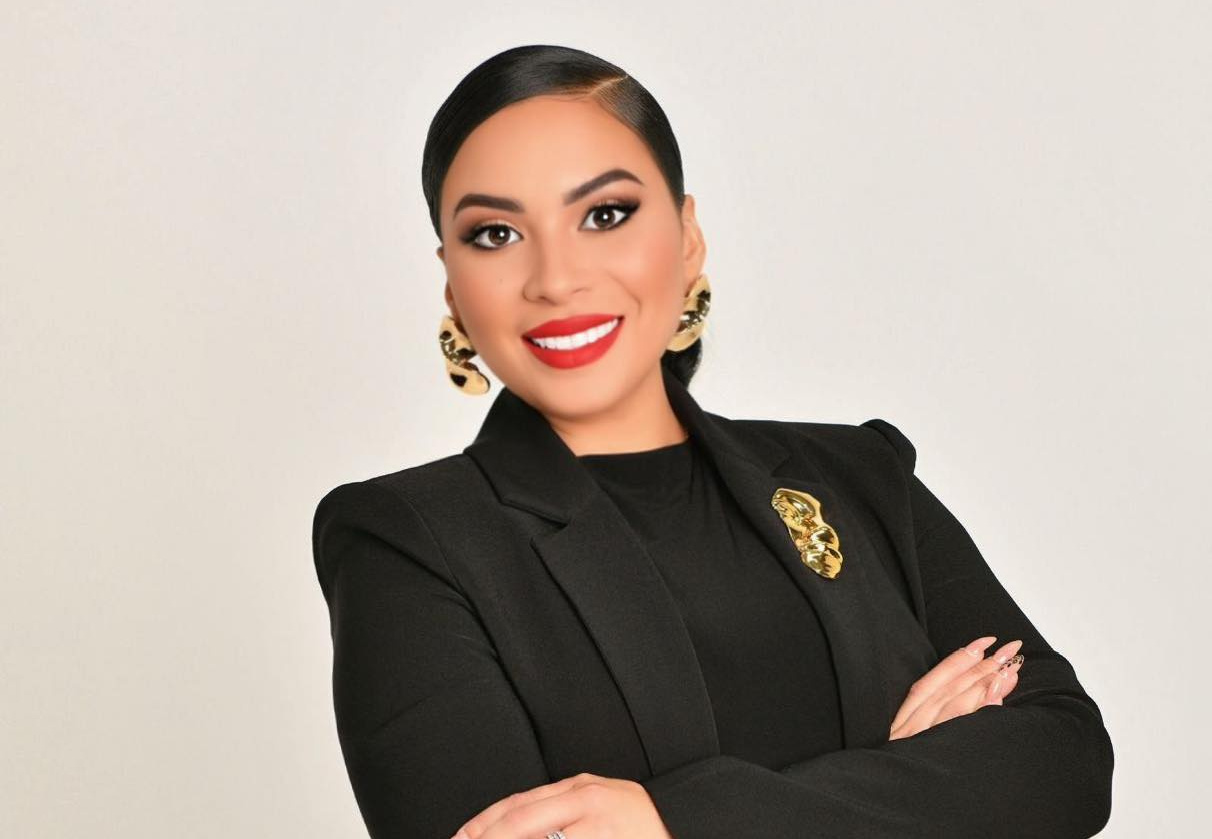
Independent Senate candidate Bianca Francis is pictured as she campaigns for a seat in the Virgin Islands Legislature, with her candidacy focused on community service, St. Croix’s challenges and the 2026 election cycle.
Independent Senate candidate Bianca Acevedo-Francis agreed Wednesday night that St. Croix is falling behind, but when pressed repeatedly on what she would do as a lawmaker to generate immediate economic growth, her answers centered on disaster recovery activity already underway, medical tourism, recreation, and broader calls for transparency and accountability rather than a detailed legislative plan.

The discussion took place during V.I. Consortium’s Election Cycle interview series, which is being held ahead of the Democratic primary election in August and the general election in November. The interviews are scheduled for Mondays, Wednesdays and Thursdays as the Consortium questions candidates on major issues facing the territory.
During the interview at the company’s Five Corners studio, Ms. Francis was asked whether she agreed with Senator Kurt Vialet’s recent assessment that St. Croix is “dying slowly.” Mr. Vialet had used the phrase earlier in the week while discussing the island’s economic position relative to St. Thomas.
“I do. I do agree,” Ms. Francis said.
Asked what she believes would be the most urgent fix to move St. Croix back onto an upward trajectory, Ms. Francis first pointed to disaster recovery funding, expected projects, job creation and short-term growth for small businesses as more people come to the island.
She said recovery projects could lead to jobs, business activity, healthcare improvements and new schools. However, she was reminded that disaster recovery work is already underway and asked what else she would advocate for as a senator to transform St. Croix’s economy.
Ms. Francis identified medical tourism as one area she has been examining.
“I've been looking into medical tourism, boosting our tourism, but on the medical front,” she said, adding that the conversation would still need to keep residents’ best interests at the center.
Asked to explain the concept further, Ms. Francis pointed to other destinations known for specific forms of medical care.
“So, you know, we have islands like the Dominican Republic, which is known for plastic surgery,” she said. “We have, you know, Colombia, which now they're, you know, they have like the best dentists you can get your teeth done there.”
Ms. Francis said St. Croix could eventually position itself as a place where people receive specialized care and recover in a desirable setting.
“People want to recover in paradise,” she said.
But the proposal immediately raised questions about timing and feasibility. Mr. Gilbert pointed out that Ms. Francis had already acknowledged the severe condition of healthcare on St. Croix, where the island’s new hospital still has not been built and could remain years away. He noted that some projections place completion four, five or even ten years down the road, while St. Croix needs economic help now.
Asked whether medical tourism would first require the island to be able to properly care for its own residents, Ms. Francis agreed.
The exchange underscored the longer-term nature of the idea. While medical tourism could be explored as a future opportunity, the discussion highlighted that such a strategy would depend on a stronger healthcare system, a completed and functional hospital, available personnel, specialized services and the ability to meet local needs before marketing St. Croix as a destination for outside patients.
Pressed again for more immediate economic development ideas, including whether she had considered manufacturing, hotel development or similar strategies, Ms. Francis said the island must have more to offer visitors.
“We can't build more hotels, and we have nothing to offer,” she said.
When it was noted that many would argue St. Croix’s island beauty, culture and tourism product are themselves major offerings, Ms. Francis said she believes the island also needs more recreational activity and entertainment.
“So we need to build more recreational things, and I would say support more recreational things, so that people build that interest to come here,” she said.
She said the Virgin Islands has some of the best beaches, but added that other Caribbean destinations also have clear waters and offer visitors additional things to do. If the goal is to get visitors to stay more than one day, she said, St. Croix must have more activities available.
Asked directly whether she was not necessarily in favor of hotel development yet, Ms. Francis said her focus would be on bringing more recreational options, entertainment and businesses that give people a reason to come.
The healthcare issue returned as part of the broader discussion about St. Croix’s disadvantages. Earlier in the exchange, Ms. Francis said healthcare on the island is at a critical point and questioned whether St. Croix would be able to sustain a fully functioning hospital even after a new facility is eventually built.
“I just asked the questions,” she said. “You know, what's going to happen after the ribbon cutting? Are we going to be able to sustain a fully functioning hospital, you know, are we going to be able to provide the resources, the equipment, the personnel, to make sure that long term we have a fully functional hospital.”
Asked what she would do as a senator to ensure that leaders follow through and provide the hospital with what it needs, Ms. Francis said lawmakers must stay on top of officials, ask difficult questions, and demand accountability and transparency.
“You stay on top of them, you ask the tough questions, you know, you hold people to the fire, accountability, force transparency,” she said. She added that she believes government is failing because of a lack of transparency and accountability.
The interview also focused on whether Ms. Francis would be willing to take a hard stance to secure St. Croix’s fair share in major funding decisions. She was asked whether she would hold up major measures, such as a budget bill or large project, if St. Croix did not receive equitable treatment.
Ms. Francis said she does not like division and views the Virgin Islands as one territory. However, she acknowledged that St. Croix has long been treated unfairly.
“It's evident that St. Croix has been treated as the black sheep of the territory,” she said. “We always get what they said is scraps.”
She said she would fight for St. Croix, but would not make a blanket statement that she would hold up any measure because it would depend on the magnitude of the issue and the impact on the broader territory.
“I can't just say that I would hold anything, because we're one territory,” she said. “We're one people.”
Ms. Francis later pointed to her own family’s experience with healthcare access as an example of St. Croix’s challenges. She said she had to travel to St. Thomas with her father for specialized healthcare for what she described as a small in-office procedure, incurring additional costs because the service was not available on St. Croix.
“It's not cheap to travel to St. Thomas,” she said, adding that it was cheaper when Spirit Airlines served the market to travel to Fort Lauderdale than to St. Thomas.
She said healthcare services too often require St. Croix residents to travel to St. Thomas. “Everything goes over to St. Thomas,” Ms. Francis said.
Later in the interview, when asked more generally how the government could generate more revenue, Ms. Francis pointed to economic development, the Economic Development Commission program, light manufacturing, South Shore opportunities, and making the territory more attractive to investors. She also emphasized oversight, transparency and accountability over funds and benefits already flowing through the system.
But on the central question of how she would immediately help St. Croix reverse what she agreed is a decline, Ms. Francis did not offer a detailed legislative plan. Her clearest economic ideas centered on long-term medical tourism, stronger recreation and entertainment offerings, disaster recovery activity already underway, and the need for better healthcare capacity — all areas that would require further planning, funding and execution before producing the immediate growth St. Croix is seeking.


Advertisements