

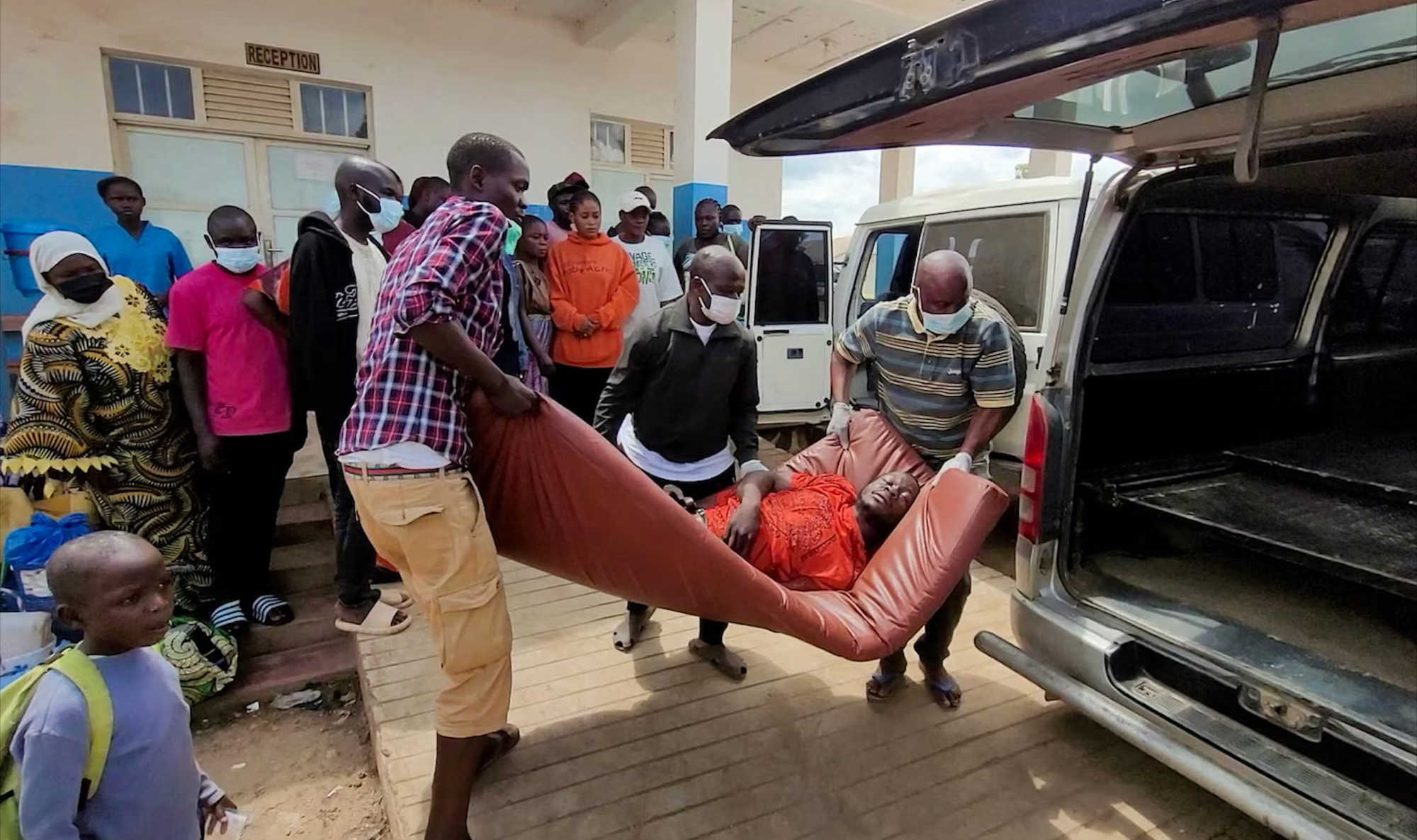
The Ebola outbreak in eastern Democratic Republic of Congo and Uganda has sharply worsened just days after the World Health Organization declared it a public health emergency of international concern, with Congolese officials now reporting more than 500 suspected cases and 131 deaths as global health officials warn that the true scale of the outbreak may still be unclear.

WHO Director-General Dr. Tedros Adhanom Ghebreyesus told the World Health Assembly in Geneva on Tuesday that he was alarmed by how quickly the outbreak is developing.
“I'm deeply concerned about the scale and speed of the epidemic,” Tedros said, citing the growing number of cases in urban areas and among healthcare workers.
The latest figures remain fluid. Congo’s health minister, Samuel Roger Kamba, said Tuesday that “513 suspected cases and 131 deaths have been recorded in the affected areas,” while also cautioning that the deaths remain under investigation to determine which are directly linked to the disease. Reuters, citing a daily bulletin from Congolese health authorities, reported 516 suspected cases and 33 confirmed cases in Congo, with two confirmed cases in neighboring Uganda.
The current outbreak involves the Bundibugyo strain of Ebola, a rare variant for which there are currently no approved strain-specific vaccines or treatments. Health authorities say this is only the third known detection of Bundibugyo virus, despite more than 20 Ebola outbreaks occurring in Congo and Uganda over the years.
The WHO declared the outbreak a public health emergency of international concern over the weekend, but stopped short of calling it a pandemic emergency. In its declaration, the agency said the outbreak was extraordinary because of suspected deaths across several health zones, confirmed spread into Uganda, healthcare worker deaths, uncertainty over the true number of infections, and the lack of approved Bundibugyo-specific vaccines or therapeutics.
WHO said earlier data showed eight laboratory-confirmed cases, 246 suspected cases and 80 suspected deaths across at least three health zones in Ituri Province, including Bunia, Rwampara and Mongbwalu. Since then, reported figures have climbed sharply.
Cases have now been confirmed in Bunia, Goma, Mongbwalu, Butembo and Nyakunde, according to AP. Goma, the capital of North Kivu, is particularly concerning because it is a major urban center and was seized by M23 rebels last year, adding insecurity to an already difficult public health response.
The WHO has also raised concern about possible transmission within health facilities. At least four deaths among healthcare workers with symptoms consistent with viral hemorrhagic fever had been reported from affected areas, suggesting possible gaps in infection prevention and control.
Tedros said the numbers are expected to shift as field operations expand.
The WHO chief said case counts “will change as field operations are scaling up, including strengthening surveillance, contact tracing and laboratory testing.”
The agency has approved $3.9 million in emergency funding to support national authorities responding to the outbreak. WHO experts are also expected to advise on the response, including whether any vaccine options could be used against the Bundibugyo strain.
The United States has also become directly involved. The U.S. Centers for Disease Control and Prevention said an American who was exposed while caring for patients in Congo tested positive for Ebola Bundibugyo disease on May 17. The patient and high-risk contacts associated with the exposure are being moved to Germany for care and monitoring. The U.S. State Department has mobilized an initial $13 million in foreign assistance for outbreak response efforts.
The spread is being complicated by conflict, population movement, informal healthcare facilities and economic insecurity in eastern Congo. The affected Ituri region borders Uganda and South Sudan and is both a business center and a migratory hub. The Guardian reported that residents in affected communities fear both the disease and the economic effects of possible restrictions in an area already under pressure from armed conflict and poverty.
The response challenge is also magnified by the nature of Ebola itself. The virus spreads through direct contact with bodily fluids from infected people or animals and can cause fever, vomiting and bleeding. According to WHO, the average Ebola fatality rate is about 50 percent, though past outbreaks have ranged from 25 percent to 90 percent.
Health officials are now focused on surveillance, contact tracing, laboratory testing, infection control, patient isolation, healthcare worker protection and community awareness. In the absence of an approved Bundibugyo-specific vaccine, response efforts rely heavily on rapid detection, safe care, prevention measures and public cooperation.
The outbreak has revived memories of Congo’s 2018-2020 Ebola crisis in Ituri and North Kivu, the second-deadliest Ebola outbreak on record, which killed nearly 2,300 people and was complicated by violence and mistrust. Health experts now warn that similar conditions could again make containment difficult unless the response expands quickly.
For now, WHO and national authorities are treating the outbreak as a fast-moving regional emergency, with confirmed cross-border spread, rising suspected cases, urban transmission concerns and no approved vaccine specific to the strain driving urgent international attention.



Advertisements