



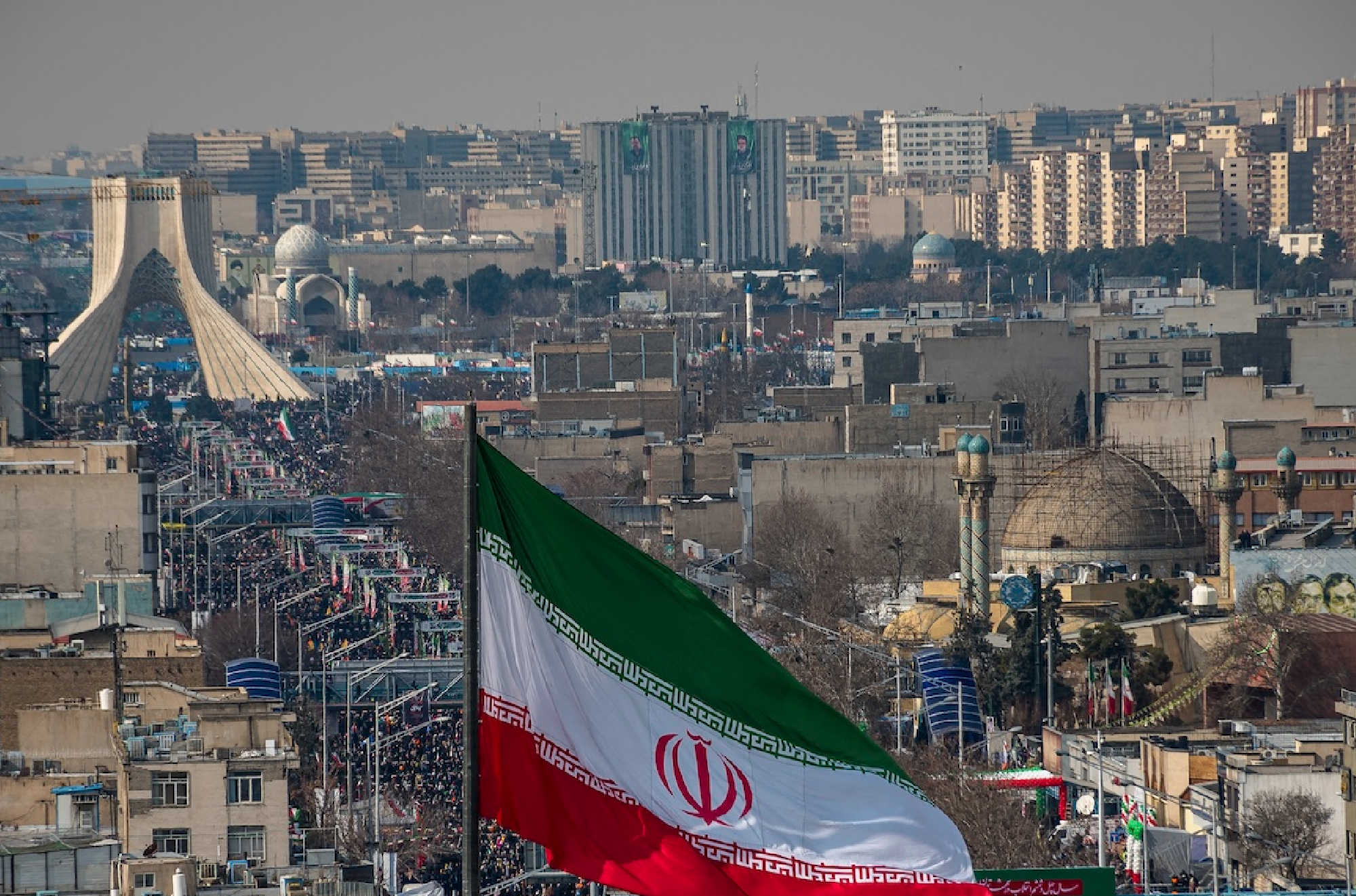
Iranians gathered in Tehran on Feb. 10, 2025 for a rally commemorating the 46th anniversary of the country’s 1979 Islamic Revolution.
Oil prices fell after President Donald Trump said the United States and Iran have “largely negotiated” a framework that could reopen the Strait of Hormuz and begin ending the U.S.-Israel war against Iran, but major disputes remain over sanctions, frozen funds, future U.S. attacks, regional hostilities and Iran’s nuclear program.

The prospect of an agreement has eased some pressure in global energy markets, though the relief remains uncertain. The war, which began when the United States and Israel launched strikes against Iran on February 28, led to Iran’s response and the severe disruption of one of the world’s most important energy routes. The closure or restriction of the Strait of Hormuz drove up oil prices and created wider pressure on fuel, shipping, food and utility costs around the world.
Oil markets have eased from earlier war-driven highs, but the latest pricing suggests caution rather than a full reversal. Brent crude was trading around $88.17 on May 22, up 0.41% on the day, with a previous close of $87.81. That leaves prices far below the peak pressure seen during the Hormuz crisis, but still high enough to keep fuel, freight and utility costs under pressure in import-dependent markets.
Trump said the “final aspects and details” of a deal were being discussed and that an announcement could come soon. The emerging framework is expected to address the reopening of the Strait of Hormuz, a critical oil and gas shipping route whose disruption has been at the center of the global energy shock.
Reports from U.S. and Iranian media have described the draft as a phased framework that would end fighting, reopen the waterway and potentially lift a U.S. blockade on Iran. Negotiations over Iran’s enriched uranium stockpile would reportedly take place within 30 to 60 days.
According to reporting from several major outlets, the proposal includes a 60-day ceasefire extension during which the Strait of Hormuz would reopen, Iran would be allowed to sell oil freely, and talks would continue on limits to Iran’s nuclear program. The proposal reportedly calls for Iran to clear mines from the strait and allow ships to move freely, while the United States would lift its blockade on Iranian ports and issue some sanctions waivers.
The U.S. position remains centered on preventing Iran from obtaining a nuclear weapon. Trump has repeatedly framed the war as necessary to prevent Tehran from acquiring one, while Iran has denied pursuing nuclear weapons and maintained that it has a right to enrich uranium for civilian purposes.
Even with the apparent progress, negotiations remain difficult. Iran’s Tasnim news agency reported that differences remain over one or two clauses. Iranian Foreign Ministry spokesperson Esmail Baghaei said that while “the trend this week has been towards a reduction in disputes,” unresolved issues still need to be handled through mediators.
Iran has continued to prioritize an end to the threat of new U.S. attacks, the lifting of sanctions, the release of frozen funds, and progress on broader regional hostilities, including Lebanon. Iranian reporting has also indicated that any changes in navigation through the Strait of Hormuz would depend on the United States implementing other commitments, and that frozen Iranian funds must be released in the first phase of the deal.
The framework also carries regional political complications. Trump reportedly spoke with leaders from Saudi Arabia, Qatar, the United Arab Emirates, Jordan, Egypt, Turkey and Pakistan, who encouraged him to accept the emerging framework. Trump also said a call with Israeli Prime Minister Benjamin Netanyahu went “very well,” though Israeli political figures have raised concerns about any deal that includes a ceasefire in Lebanon.
For global markets, the central question is whether any agreement can restore predictable movement through Hormuz. Before the war, the strait was central to global oil and gas flows. Its closure and restricted use pushed up fuel, fertilizer and food costs, contributing to inflation and transportation strain. Prices are now falling on hopes of a deal, but energy markets remain vulnerable until shipments normalize.
That distinction matters for the U.S. Virgin Islands. The territory imports the overwhelming majority of what it consumes, meaning fuel and freight shocks quickly reach households and businesses. Earlier Consortium reporting found that Tropical Shipping and Crowley raised fuel-related cargo charges affecting U.S. Virgin Islands trade after the war constrained Hormuz and pushed oil above $100 a barrel.
Local fuel prices also reflected the pressure. Regular gasoline reached $5.32 per gallon at a St. Thomas Puma station on May 3, while premium prices on St. Croix topped $5 in some locations. Higher fuel costs affect more than drivers, placing pressure on freight, construction, restaurants, grocery pricing, delivery costs, taxis and inter-island business activity.

WAPA remains another local pressure point. The Consortium has reported that oil above $100 placed WAPA and the Public Services Commission on a collision course over rising costs, with the territory still vulnerable to imported fuel prices even though the utility has reduced its dependence on oil. Any sustained drop in crude prices could eventually ease energy-related pressure, but relief would depend on how quickly supply, shipping and procurement costs fall.


Advertisements