



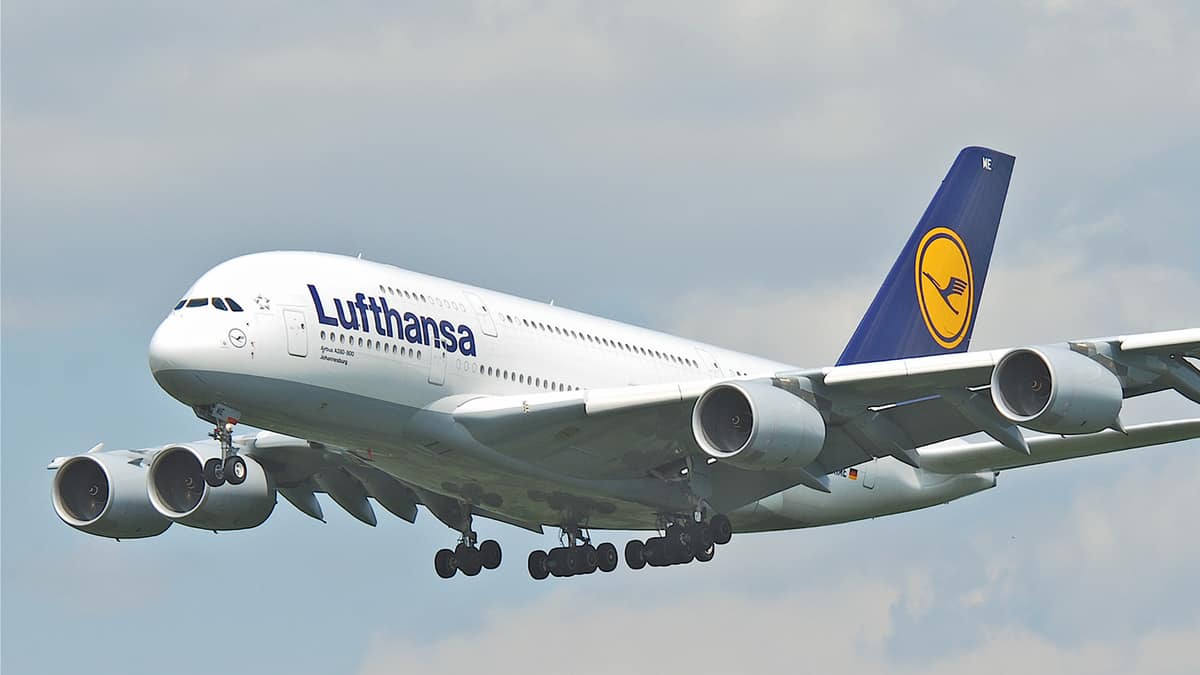
A Lufthansa aircraft, as the airline cuts 20,000 flights amid soaring fuel pressure tied to the Iran war and the Strait of Hormuz crisis.
President Donald Trump said the United States will indefinitely extend its ceasefire with Iran to allow more time for diplomacy, but the move has done little to ease the core dispute now threatening the broader economy. Tehran says it will not enter a new round of negotiations while Washington continues blockading Iranian trade by sea and seizing Iranian vessels. Trump said he approved the extension at Pakistan’s request, even as he made clear the U.S. Navy would keep the blockade in place.

Rather than reviving peace efforts, the extension has left them in doubt. Before Trump’s announcement, a senior Iranian official said Tehran could attend talks in Pakistan only if Washington abandoned what Iran described as a policy of pressure and threats, and rejected negotiations “aimed at surrender.” Pakistan has meanwhile been trying to persuade the United States to lift the naval blockade and release the Iranian-flagged container ship Touska, which was boarded and seized by U.S. forces.
Iran’s rhetoric has sharpened as the maritime confrontation has deepened. The country’s foreign ministry accused the United States of “piracy at sea and state terrorism” after the U.S. Navy intercepted and seized two commercial Iranian ships as part of the blockade. Trump, meanwhile, said lifting the blockade would undermine any chance of a deal.
The ceasefire extension has not ended the energy shock. Brent crude briefly climbed back above $100 a barrel on Wednesday after reports that at least three container ships were hit by gunfire in the Strait of Hormuz. It later eased below that level but still hovered near $98 to $100 a barrel, far above pre-war levels and high enough to keep inflation and supply-chain concerns alive.
At the center of the crisis is the Strait of Hormuz itself. Shipping through the waterway remains largely at a standstill, with only three vessels passing through in a 24-hour period, even though the strait normally handles about 20% of the world’s oil and liquefied natural gas supplies. The war, launched by the U.S. and Israel with aerial bombardments of Iran on Feb. 28, has since shaken the global economy and left the strait virtually closed.
The economic danger is no longer theoretical. Analysts have warned of recession risk if the Hormuz disruption drags on. The International Monetary Fund has already cut its 2026 global growth forecast to 3.1%, and under its more severe scenarios, the world edges toward recession if oil remains near or above $100 for an extended period. The International Energy Agency has described the current Middle East supply disruption as worse than the oil shocks of the 1970s.
The strain is already spreading far beyond oil traders. The war has added more than $100 to the average fuel cost of long-haul flights from Europe, and airlines have warned that prolonged disruption could lead to cancellations and higher fares. Lufthansa, one of Europe’s largest airline groups, is reducing flights in response to rising fuel costs tied to the war and the Strait of Hormuz disruption. It has canceled 20,000 short-haul flights and some European routes through October in an effort to conserve jet fuel, a move representing about a 1% reduction in passenger capacity. The airline expects to save more than 40,000 metric tons of jet fuel.
Taken together, the latest developments leave the war in a precarious place. Trump has chosen to extend the ceasefire rather than resume immediate large-scale attacks, but the blockade Iran views as an act of war remains in force, talks are still uncertain, and the Strait of Hormuz remains so constrained that oil, aviation and the broader global economy continue to absorb the shock.



Advertisements