



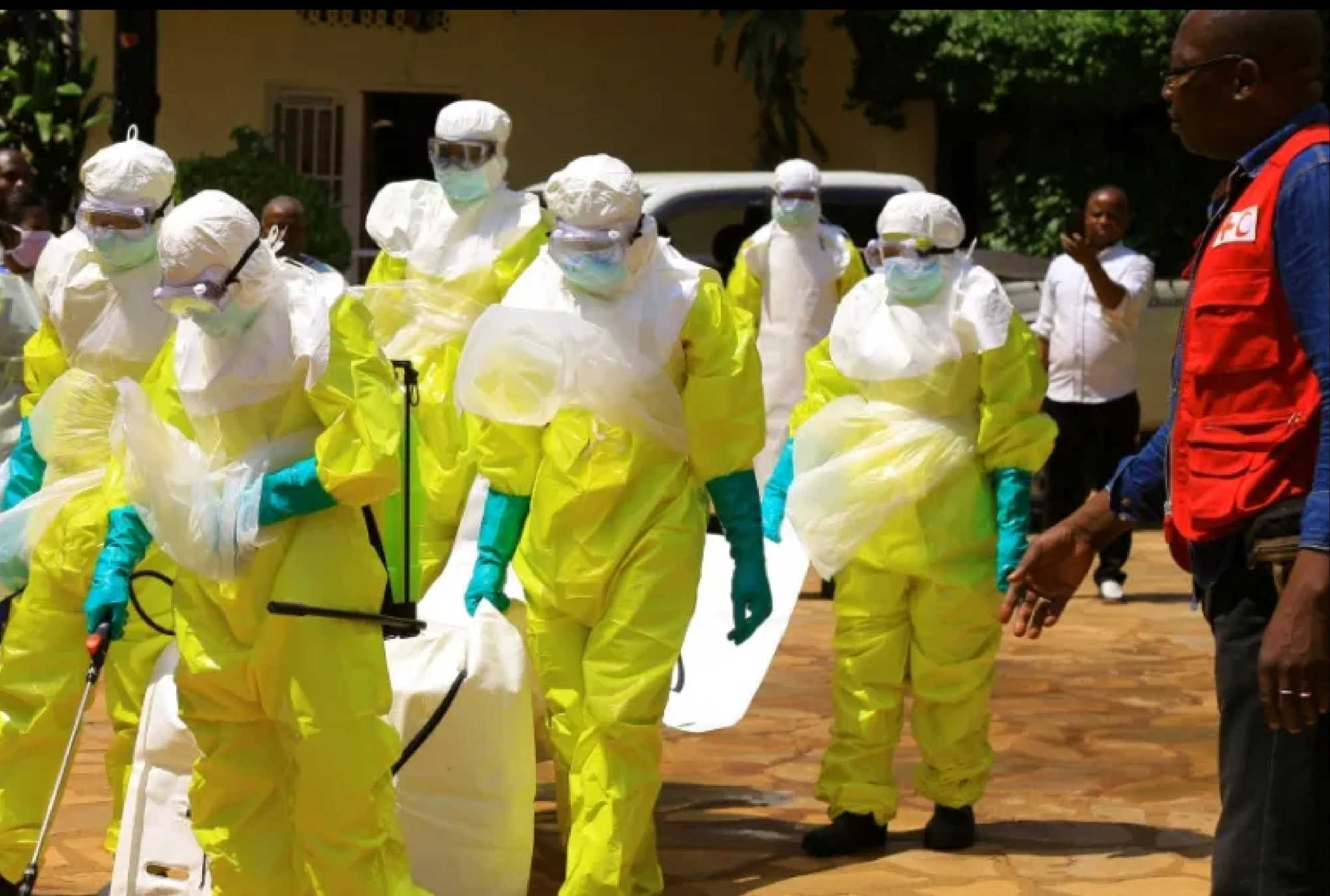
The World Health Organization has declared the Ebola outbreak in the Democratic Republic of the Congo and Uganda a public health emergency of international concern, warning that the rare Bundibugyo strain has already crossed borders, poses a regional risk, and has no approved strain-specific vaccine or treatment.

WHO made the declaration Sunday, stating that the outbreak does not meet the criteria for a pandemic emergency, but is serious enough to require urgent international coordination. The outbreak is centered in eastern Congo’s Ituri Province, with confirmed cases also reported in Uganda’s capital, Kampala, and in Kinshasa, the capital of the Democratic Republic of the Congo.
According to WHO, as of May 16, the DRC had reported eight laboratory-confirmed cases, 246 suspected cases and 80 suspected deaths across at least three health zones in Ituri Province, including Bunia, Rwampara and Mongbwalu. WHO also reported two laboratory-confirmed cases in Kampala, including one death, involving individuals who had traveled from the DRC. A separate laboratory-confirmed case was also reported in Kinshasa among a person returning from Ituri.
Other reporting from Africa CDC, cited by AP and Al Jazeera, placed the broader count at more than 300 suspected cases and 87 to 88 deaths, underscoring concerns that the outbreak may be larger than what has been formally detected.
The outbreak is caused by Bundibugyo virus disease, a rare form of Ebola. Unlike the more common Zaire strain, WHO said there are currently no approved Bundibugyo-specific therapeutics or vaccines. Health authorities say this is only the third known detection of the Bundibugyo strain, which was first reported in Uganda’s Bundibugyo district during a 2007-2008 outbreak, and later in Congo in 2012.
WHO described the event as “extraordinary,” citing the number of suspected deaths, the spread across multiple health zones, the confirmed international spread into Uganda, and uncertainty over the true number of infected people and geographic reach of the outbreak.
The agency also warned that the outbreak poses a public health risk to other countries through international spread. Countries sharing land borders with the DRC are considered at high risk, and WHO has advised governments to activate national disaster and emergency management mechanisms, strengthen cross-border screening, and screen travelers on major internal roads.
At the same time, WHO urged countries not to close borders or impose broad travel and trade restrictions out of fear. The agency warned that such measures could push people and goods into informal crossings that are harder to monitor.
For confirmed cases and contacts, WHO recommended immediate isolation, daily monitoring, restricted national travel and no international travel until 21 days after exposure, except for medical evacuation.
Ebola is a severe and often fatal disease that spreads through direct contact with the blood, secretions, organs or other bodily fluids of infected people, or through contaminated surfaces and materials such as bedding and clothing. Symptoms may include fever, body aches, vomiting and diarrhea.
The response is being complicated by conflict, migration and mining-related population movement in eastern Congo. AP reported that Africa CDC Director-General Dr. Jean Kaseya said a high number of active cases remain in the community, particularly in Mongwalu, where the first cases were reported, making containment and contact tracing more difficult.
The Guardian also reported that WHO warned the signs “all point towards a potentially much larger outbreak than what is currently being detected and reported,” and that conflict, population movement and crowded living conditions could increase the risk of spread.
The declaration is intended to mobilize global attention, resources and technical support for the affected countries. Global health observers have noted that a PHEIC declaration does not automatically guarantee rapid delivery of supplies, but it can help accelerate coordination, surveillance, funding and international response.
WHO Director-General Dr. Tedros Adhanom Ghebreyesus expressed gratitude to the governments of the DRC and Uganda for their response efforts and their willingness to assess the risk posed to other countries, saying that transparency allowed the global community to take preparedness actions.

The situation remains fluid, with health authorities working to determine the full scale of the outbreak, strengthen diagnostics, trace contacts, support infection control, and determine whether any early-stage vaccines, treatments or tests could be safely used or trialed during the response.


Advertisements