



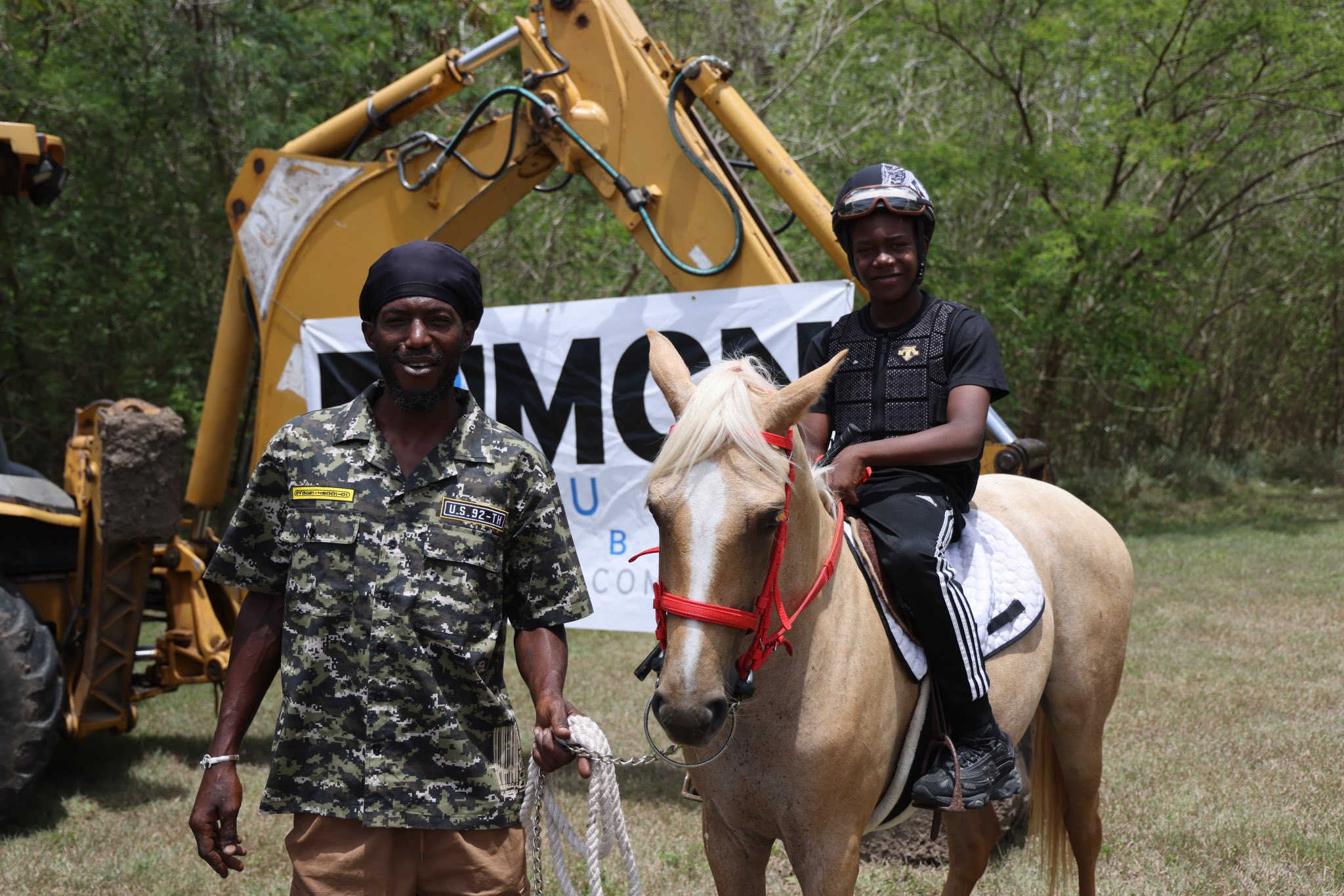
A young rider sits atop a horse beside a handler during Tuesday’s groundbreaking ceremony for the Virgin Islands Equestrian Training Center on St. Croix. Photo Credit: GOV'T HOUSE.
The Virgin Islands broke ground Tuesday on a new Equestrian Training Center on St. Croix, marking the start of a project officials say will give young riders a safe, structured place to train while helping preserve the territory’s horse culture and build pathways into agriculture, animal care, mentorship and the racing industry.
The facility, planned for Estate Body, is backed by a $900,000 appropriation from the Community Facilities Trust and is expected to focus on jockey training, stable management and veterinary programs. The project stems from legislation sponsored by then-Senator Javan James Sr. and advanced with the support of Senator Angel Bolques Jr., with construction expected to take six months to complete.

Throughout Tuesday’s ceremony, speakers highlighted the long history of equestrianism among St. Croix youth and said the new facility would help place that tradition within a safer, more structured and more productive environment.
Stanley Acoy, representing the Flamboyant Horsemen Association, spoke about his years training Crucian boys to race horses. He said one tragedy in particular convinced him that a formal training program was necessary: the death of one of his trainees, who lost control of a racehorse and suffered a fatal fall. “Up to today it haunts me,” Mr. Acoy said, noting that he began lobbying for a jockey school approximately four years ago.
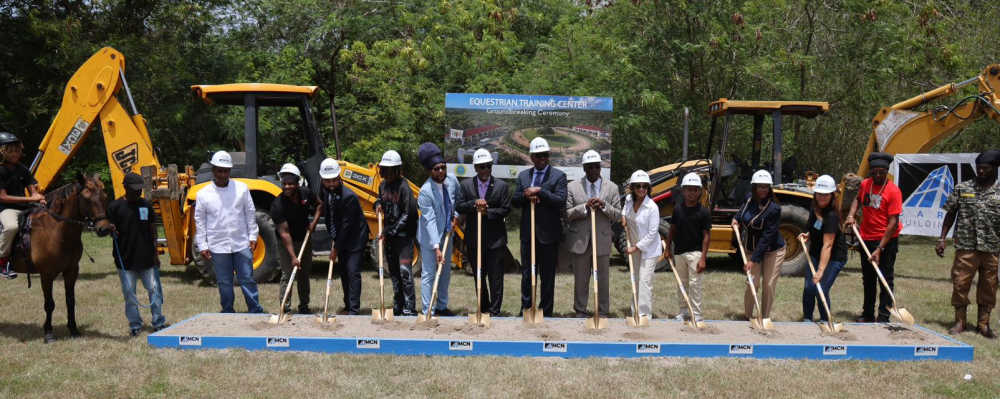
Officials, community partners and youth riders participate in Tuesday’s groundbreaking ceremony for the Virgin Islands Equestrian Training Center on St. Croix, marking the start of a six-month buildout for a facility aimed at youth training, horsemanship and horse racing pathways. Credit: Government House.
Even without a formal program, Mr. Acoy said young jockeys who got their start on the highways and beaches of St. Croix have gone on to find success on the mainland, including riding in the Kentucky Derby and the Preakness. He said a new facility could help divert young Crucian children from life on the street by giving them discipline, structure and a professional pathway.
Genevieve Whitaker, executive director of Career and Technical Education in the territory, said the project is about taking an existing passion among young people and giving it direction. “We take the passion and provide direction, we take talent and provide structure, because horse racing – the sport of kings – should be safe, structured, and sustainable,” she declared.
Shamari Haynes, president of the Governor’s Millennial Council, said the significance of the project lies in the intentional effort to build opportunity around a long-standing cultural tradition. “What makes this initiative so significant is that we are now intentionally creating structure and opportunity around tradition,” he noted.
Mr. Haynes said the training center will not only develop jockeying skills, but will also “expose young people to agriculture, entrepreneurship, tourism, recreation, animal care, and workforce development, in ways that are hands-on, meaningful, and impactful.”
Vincent Roberts, the commissioner of the Department of Sports, Parks and Recreation said trainees at the facility will also learn “discipline, responsibility, sportsmanship…and career pathways connected to the equine industry.”
MCN Build, which is deeply involved in the territory’s disaster recovery construction programs, is providing “project planning, conceptual design, development, budgeting, and stakeholder co-ordination” services for the project at no cost, according to Lisa Anders, a senior vice president of the company.
Ms. Anders spoke fondly of the time she spent on St. Croix as a young person visiting her physician father. Among her strongest memories, she said, were scenes of children on horseback. “I’d always stop and take a picture – two Crucian young’uns riding under the canopy trees along the winding road,” Ms. Anders said.
She said her connection to the territory has been reinforced through her firm’s work. “Our commitment to the Virgin Islands is not transactional, it's personal….We believe in investing in communities where we live, work, and play,” she declared.
Several speakers also emphasized the collective effort required to move the project forward. Teri Helenese, the governor’s representative in Washington, D.C., was credited during the ceremony with helping coordinate stakeholders and move the initiative forward. She said the facility reflects what can happen when stakeholders unite around the needs of young people.
“Projects like this do not happen because of one individual; they happen because people come together around a shared belief that our youth deserve more opportunities, more support, and more pathways to success, and that is exactly what this facility represents,” Ms. Helenese said.
She said youth development should not be limited to traditional classrooms or traditional sports, because children discover purpose in different ways.
“When we talk about investing in our youth, we often think about traditional classrooms or traditional sports, but every child discovers purpose differently. Some young people thrive academically, some are creative, some need movement, some need mentorship, some simply need an environment that allows them to feel seen, valued, and capable, this equestrian center will become that kind of place,” Ms. Helenese said.
Governor Albert Bryan Jr. said children in the territory need access to a wide range of experiences beyond academics if they are to develop their full abilities.
“I want children to be exposed to everything they can,” he said, “because you could be the greatest concert pianist in the world, but if you never see a piano, that will never happen. You just, you could be the greatest jockey in the world, but if you never have a chance to be exposed to horses, you will never know. So, creating things in school beyond books and lessons that interest our kids, it doesn't matter why they come in to study, as long as they come to study.”
The governor also said jockeying is one field unlikely to be replaced by artificial intelligence. “AI going to take over a lot of things, but … ain't no AI jockey coming, you're going to need human beings to ride these things,” he said.
Mr. Bryan said the new facility would benefit not only St. Croix, but the wider Virgin Islands economy. He said the territory is getting a ferry capable of transporting horses, trailers and other equipment between St. Thomas and St. Croix every day.
“We're getting a ferry that could take horses, trailers, everything between Saint Thomas and Saint Croix every single day, that's amazing, that's huge. It's just broadening both economies with the possibilities that we could create,” he said.
Senator Angel Bolques Jr., who co-sponsored the legislation that created the appropriation, said the equestrian training facility is part of a larger vision for the future of the horse racing industry in the Virgin Islands.
“I want to say that this is the precursor of what is yet to come. This is the missing link between creating what is considered to be the true continuity of a horse racing industry in the Virgin Islands,” he declared.
He said the facility would create a direct link between young people learning the sport and the adults who will eventually lead the industry. “This is a linear creation of an industry from the youth to the adults who will be leading the horse racing industry here in the Virgin Islands,” Senator Bolques said.
Katarzyna Bednarska, president of the Youth Horse Association of St. Croix, expressed hope that the facility would help establish the Big Island as “a major center for horse racing and equine industry, creating opportunities for our youths and giving them a positive future doing what they love.”

According to the timeline outlined when funding for the project was appropriated in 2024, construction of St. Croix’s new equine training facility is expected to take six months to complete.


Advertisements


