



Supervisor of Elections Caroline Fawkes says the federal requirement that the V.I. Delegate to Congress race appear on a separate ballot is “discriminatory in today’s day and age,” and is calling on the territory’s Delegate to seek repeal of the provision in Congress.

Ms. Fawkes argues that the Virgin Islands is now the only territory still subject to the separate-ballot mandate, after Congress removed similar language for Guam in 1992. While federal and local statutes still refer to a separate ballot for the Delegate race, Ms. Fawkes says modern voting technology, accessibility requirements and tabulation concerns support keeping the contest on one unified ballot with clear visual and structural separation.
She recommended that “the delegate…get her colleagues in Congress to repeal this law,” since “we are the only territory to which such applies.”
The issue centers on Title 48 of the United States Code, Section 1712, which provides for the election of Delegates to Congress from the U.S. Virgin Islands and Guam. The law states that “the Delegate from the Virgin Islands shall be elected at large, by separate ballot and by a majority of the votes cast for the office of Delegate.”
The language governing Guam’s Delegate no longer includes the separate-ballot requirement. When Congress acted in 1972 to allow both Guam and the Virgin Islands to be represented in Congress, delegates from both territories were to be elected by separate ballot. In 1992, Congress removed that requirement for Guam, but left it in place for the Virgin Islands.
Virgin Islands law also contains separate-ballot language. Title 18 of the Virgin Islands Code, Section 21, states that “the Supervisor of Elections shall cause to be entered on the Official Ballot a separate ballot containing the names of candidates for the office of Delegate to the House of Representatives which shall be contained in the electronic voting machines.”
Ms. Fawkes argues that implementation of existing election law “must be carefully reconciled with modern federal election requirements enacted subsequent to 1998,” including the Help America Vote Act of 2002. She also says the Elections System must consider “evolving accessibility standards under the American Disabilities Act.”
Those more recent laws, she said, “impose affirmative obligations to utilize accessible voting systems and ensure uniform, nondiscriminatory voting experiences for all voters.”
For that reason, Ms. Fawkes argues that the decision to maintain a single ballot on which voters select candidates for both local and federal contests “is not one of noncompliance, but rather of harmonizing older statutory language with contemporary federal mandates governing accessibility, voting technology, and election integrity.”
“Election authorities remain committed to implementing both the intent of the 1998 statute and the requirements of current federal law in a manner that protects voters and preserves confidence in the electoral process,” Ms. Fawkes said.
The Elections System’s position follows renewed scrutiny over the Board of Elections’ decision to maintain a single ballot for the 2026 election cycle, despite the federal language requiring the Delegate race to appear by separate ballot.
Ms. Fawkes says producing two physically distinct ballots would raise “substantial legal and administrative concerns.” She argues that two ballots “may result in the tabulation system recording multiple ballot submissions for the same voter, thereby introducing a material risk of duplicate vote counts.”
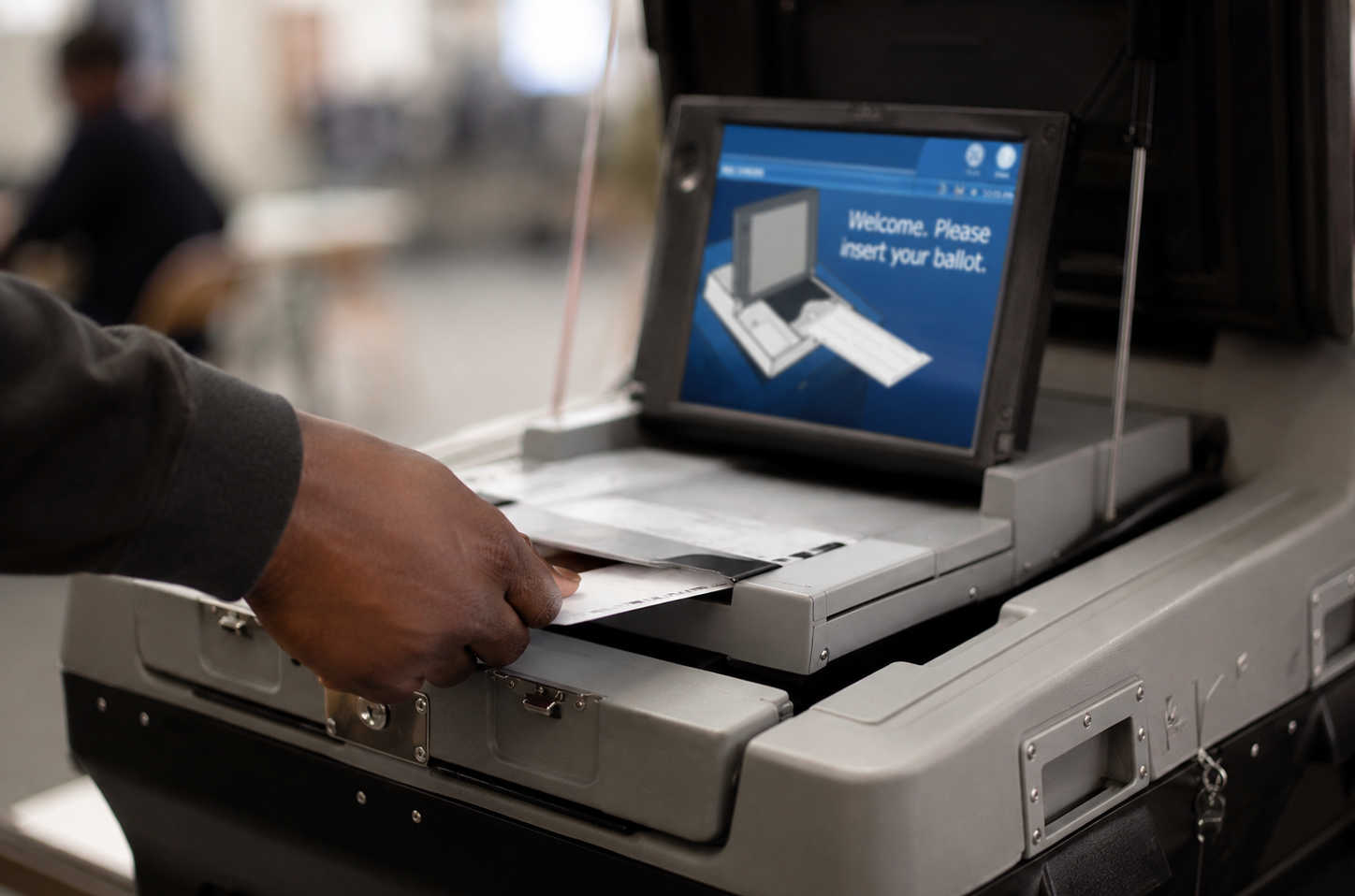
She also said the tabulation systems and the ExpressVote Ballot Marking Device currently in use are designed around a “one voter, one ballot record paradigm.” Departing from that model, she argues, “complicates reconciliation processes and risks inconsistencies during canvass and audit procedures.”
Ms. Fawkes also listed accessibility compliance risks and administrative and fiscal burdens as barriers to creating two distinct ballots.
Her position is that the federal requirement for “separate ballots” can be satisfied “through functional and structural separation within a unified ballot format, rather than requiring physically distinct ballot cards.”
Under that approach, the Delegate to Congress contest would appear in a clearly labeled, distinct section of the same ballot used for local races. Ms. Fawkes says “visual and navigational separation within the ExpressVote interface” would comply with federal and local law while producing “a single, consolidated ballot output that preserves tabulation integrity and prevents duplicate counting.”
“A unified ballot structure that preserves clear separation of contests is the most legally defensible and operationally sound method to ensure every vote is accurately cast and counted,” Ms. Fawkes concluded.

The dispute now turns on whether the statutory requirement for a “separate ballot” must mean a physically separate ballot, or whether election officials may treat a clearly separated section within one electronic ballot as sufficient.


Advertisements


