

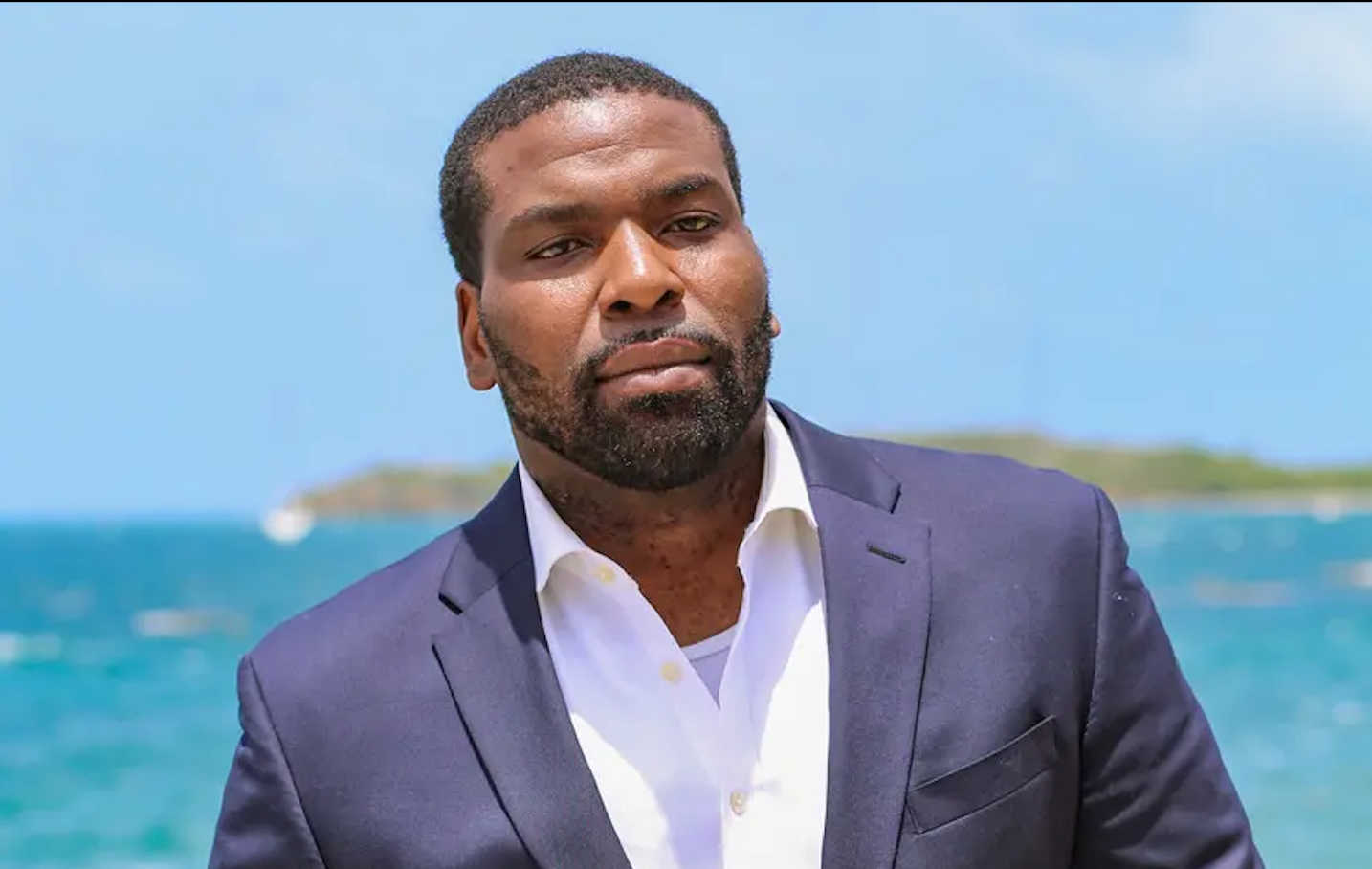
Jed JohnHope.
An attorney for Delegate to Congress hopeful Jed JohnHope is challenging his disqualification from the 2026 ballot, arguing that the Elections System of the Virgin Islands failed to provide the statutory notice required before removing him from consideration and denied him the three-day opportunity to correct alleged defects in his nomination paperwork.

In a June 1 letter to members of the Board of Elections, attorney Terri Griffiths said Mr. JohnHope was improperly disqualified after election officials determined that he had not met the signature requirements for no-party or non-party candidates seeking office.
Title 18 of the Virgin Islands Code, Section 411(c), provides that when nomination paperwork is found defective, the candidate must be “notified immediately by special messenger” with the reason or reasons for the defect. If a new valid petition, paper or certificate is not filed within three days after that notice, the candidate is disqualified for nomination or election.
Ms. Griffiths argues that Mr. JohnHope never received the notice required by law.
Last week, Supervisor of Elections Caroline Fawkes told Consortium journalists that Mr. JohnHope had fallen significantly short of the 100-signature-per-district threshold required for no-party or non-party candidates seeking office.
Ms. Griffiths said that statement was premature.
“He was not afforded the opportunity to cure,” she wrote.
According to Ms. Griffiths, when the filing deadline arrived without enough signatures for Mr. JohnHope, he was told he had to wait until he received a statutory notice of deficiency. That notice, she said, would begin the three-day period during which he could submit valid documents to meet the required threshold.
Instead, Ms. Griffiths said, Ms. Fawkes issued a public statement indicating that Mr. JohnHope had been disqualified.
“I am confident that the courts will not consider this as satisfying the statute,” Ms. Griffiths wrote.
The attorney also argues that a later email notifying Mr. JohnHope of his disqualification did not satisfy the statute’s notice requirement. In her view, neither a press release nor an email meets the requirement for notice “by special messenger.”
Her letter further states that an attempt to deliver the required signatures on Monday was refused by election officials.
Ms. Griffiths also challenged what she described as an objection to the color of the paper used for some of the signatures. She alleged that someone at the Board of Elections objected because the signatures were not on “green” paper.
“Nothing in the statute requires a certain color of paper,” she wrote. “Courts have no problems striking down onerous obstacles.”
The attorney argued that the Elections System’s concern “appears to elevate form over substance,” saying the nomination papers submitted contained the information needed to identify electors and verify signatures.
“The purpose of the nomination process is to establish voter support and verify compliance with statutory requirements—not to create additional barriers based upon the color of the paper used for submission,” she wrote.
Court documents reviewed by the Consortium include additional nomination signature pages for both the St. Thomas-St. John and St. Croix districts, along with affidavits of circulator. Ms. Griffiths said those signatures were submitted before the statutory clock even began, because Mr. JohnHope had not received the required notice by special messenger.
“Again, any deficiency has been cured without receipt of statutory notice of a deficiency,” Ms. Griffiths wrote.
She asked the board to accept the appeal, accept the enclosed nomination signatures, and reverse the disqualification decision. She also requested that the board issue a corrected press release.
A response is requested by Friday, according to Ms. Griffiths. If the matter is not resolved, she indicated that she is prepared to take the dispute to court.
The developments add to a filing season already marked by questions over candidate eligibility as the territory prepares for primary and general elections later this year.



Advertisements