

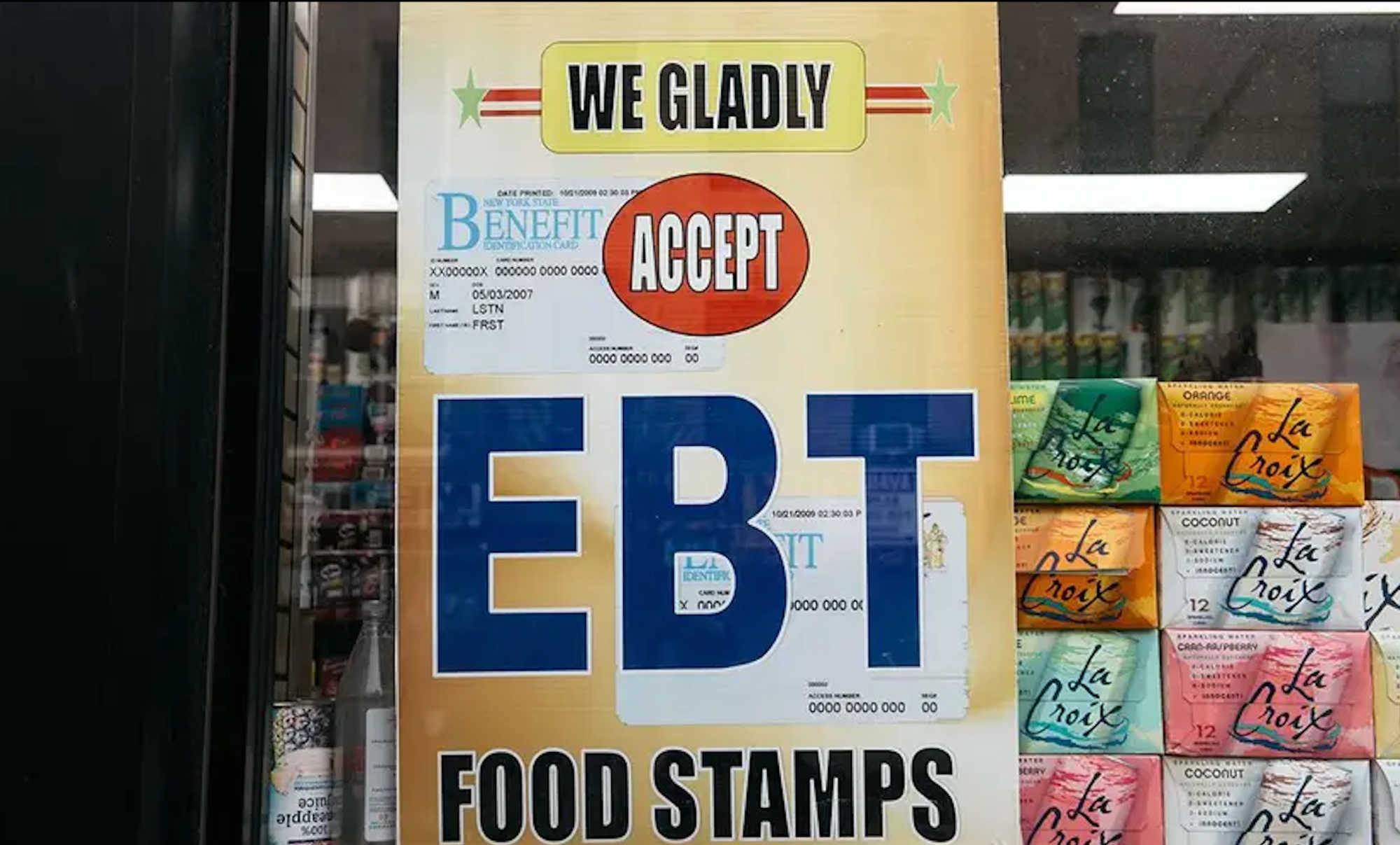
Delegate to Congress Stacey Plaskett is warning that the House-passed Farm Bill leaves in place what she described as the largest SNAP cuts in history, saying the legislation fails to reverse $187 billion in food assistance reductions approved under H.R. 1 and will affect children, seniors, veterans, people with disabilities and Virgin Islanders who rely on the program.
The U.S. House of Representatives passed H.R. 7567, the Farm, Food, and National Security Act of 2026, last week. The bill now moves into the next stage of a farm bill process that has drawn sharply different interpretations from Democrats and Republicans, particularly over nutrition assistance, farm supports, conservation funding and state authority over food production standards.
In a statement issued May 1, Ms. Plaskett said the Farm Bill should have been used to support farmers and families facing rising input costs, high grocery prices, tariffs and broader economic strain. Instead, she said, the House Republican bill “chose instead to cement the largest cuts to SNAP in history — $187 billion stripped from food assistance in H.R. 1 — while offering nothing to reverse the devastation already underway.”
According to Ms. Plaskett, more than 40 million Americans will see benefits reduced or eliminated, including 16 million children, 8 million seniors, 1.2 million veterans and 4 million people with disabilities. “Virgin Islanders who rely on SNAP – our children, elders, veterans and hard-working families will feel these cuts,” she said. “This is not a policy choice. It is a moral failure.”
Republicans have framed the issue differently. House Agriculture Committee Republicans describe the Farm, Food, and National Security Act of 2026 as “a modern farm bill for modern challenges,” arguing that the legislation updates farm policy, strengthens risk management tools, expands credit access, supports rural communities, promotes precision agriculture, enhances working lands conservation programs and restores regulatory certainty in the interstate marketplace.
They also defend the SNAP changes enacted through H.R. 1, which they call the Working Families Tax Cuts, as reforms designed to save taxpayers nearly $200 billion over the next decade through state accountability measures, tighter work requirements, restrictions on future benefit increases and changes aimed at reducing what they describe as loopholes in the program.
House Agriculture Committee Chairman Glenn “GT” Thompson, the Pennsylvania Republican who sponsored the bill, argued during floor debate that producers are operating under outdated policy and need a new farm bill now. He said the legislation was shaped by more than 150 listening sessions and contains bipartisan provisions, including more than 150 bipartisan marker bills and amendments adopted during committee consideration.
Ms. Plaskett rejected the broader direction of the bill, saying Republicans used the Farm Bill to preempt state food production standards that voters had approved and the Supreme Court had upheld. House Republican materials say that provision is aimed at addressing California’s Proposition 12 and similar state mandates, which Republicans argue impose production standards beyond state borders, raise costs for producers and consumers, and create a patchwork of state-by-state rules.
Ms. Plaskett also criticized the bill’s treatment of conservation funding, saying it “gutted nearly $800 million from the Environmental Quality Incentives Program — one of the most essential tools farmers rely on to protect their land and manage rising costs.” Republican materials, by contrast, say H.R. 1 and the Farm Bill together increase baseline funding for major conservation programs over time and support locally led conservation efforts.
The Virgin Islands delegate said the bill also fails rural communities, beginning farmers and farmers of color — groups she said are important to the future of farming in the territory. She said the legislation provides no new or additional funding for rural small business programs, strips legal set-asides for beginning farmers in USDA lending, and weakens the 2501 Program, the USDA program focused on supporting farmers of color.
Republican materials say the bill works to expand opportunities for young, beginning, socially disadvantaged and veteran farmers. Those materials say the bill reduces experience requirements for certain credit access, reauthorizes loan fund set-asides for beginning farmers and ranchers, maintains mandatory funding for the Farming Opportunities Training and Outreach program at $50 million per year, and supports programs for socially disadvantaged and veteran farmers and ranchers.
Ms. Plaskett said the legislation comes at a difficult time for farmers, citing a 46 percent surge in farm bankruptcies and USDA projections that farm income will continue falling. She argued that the bill “turns its back on the very people it claims to serve.”
Despite her opposition to the overall measure, Ms. Plaskett said she secured a territorial provision in the bill. Her amendment requires the Secretary of Agriculture to conduct a study identifying suitable locations in the U.S. Virgin Islands and Guam for aquaculture small business development, including assessments of water quality, coastal access, infrastructure needs and applicable regulatory requirements.
“This support from the Department of Agriculture to the Virgin Islands aquaculture development will provide substantive support to the development of this industry,” Ms. Plaskett said. “Aquaculture represents a real opportunity for economic growth and food security in the territories, and I will continue to push for these investments.”
Still, she said the bill does not merit support if it fails to adequately support farmers of color, who she said have been disproportionately impacted by prior discriminatory policy, or programs that provide resources to new and emerging farmers.
“Make no mistake — a Farm Bill that does not support to farmers of color (who have been disproportionately impacted by prior discriminatory policy) or programs which provide resources to new and emerging farmers does not deserve our support,” Ms. Plaskett said.
She also warned that Republicans have stated their intent to pursue additional SNAP cuts through future reconciliation packages. “We cannot accept a bill that treats food assistance as an afterthought while families are paying $310 more for groceries than they were just a year ago, and fruit and vegetable prices have risen over five percent,” she said.
Ms. Plaskett urged the Senate to pursue a different approach as the bill moves forward. “I urge my colleagues in the Senate to develop a better, bipartisan farm bill — one that provides real relief to farmers crushed by falling incomes and rising costs, restores food assistance protections for millions of vulnerable Americans, invests in our rural and territorial communities, and is worthy of the American people's trust.”


Delegate to Congress Stacey Plaskett is warning that the House-passed Farm Bill leaves in place what she described as the largest SNAP cuts in history, saying the legislation fails to reverse $187 billion in food assistance reductions approved under H.R. 1 and will affect children, seniors, veterans, people with disabilities and Virgin Islanders who rely on the program.
The U.S. House of Representatives passed H.R. 7567, the Farm, Food, and National Security Act of 2026, last week. The bill now moves into the next stage of a farm bill process that has drawn sharply different interpretations from Democrats and Republicans, particularly over nutrition assistance, farm supports, conservation funding and state authority over food production standards.
In a statement issued May 1, Ms. Plaskett said the Farm Bill should have been used to support farmers and families facing rising input costs, high grocery prices, tariffs and broader economic strain. Instead, she said, the House Republican bill “chose instead to cement the largest cuts to SNAP in history — $187 billion stripped from food assistance in H.R. 1 — while offering nothing to reverse the devastation already underway.”
According to Ms. Plaskett, more than 40 million Americans will see benefits reduced or eliminated, including 16 million children, 8 million seniors, 1.2 million veterans and 4 million people with disabilities. “Virgin Islanders who rely on SNAP – our children, elders, veterans and hard-working families will feel these cuts,” she said. “This is not a policy choice. It is a moral failure.”
Republicans have framed the issue differently. House Agriculture Committee Republicans describe the Farm, Food, and National Security Act of 2026 as “a modern farm bill for modern challenges,” arguing that the legislation updates farm policy, strengthens risk management tools, expands credit access, supports rural communities, promotes precision agriculture, enhances working lands conservation programs and restores regulatory certainty in the interstate marketplace.
They also defend the SNAP changes enacted through H.R. 1, which they call the Working Families Tax Cuts, as reforms designed to save taxpayers nearly $200 billion over the next decade through state accountability measures, tighter work requirements, restrictions on future benefit increases and changes aimed at reducing what they describe as loopholes in the program.
House Agriculture Committee Chairman Glenn “GT” Thompson, the Pennsylvania Republican who sponsored the bill, argued during floor debate that producers are operating under outdated policy and need a new farm bill now. He said the legislation was shaped by more than 150 listening sessions and contains bipartisan provisions, including more than 150 bipartisan marker bills and amendments adopted during committee consideration.
Ms. Plaskett rejected the broader direction of the bill, saying Republicans used the Farm Bill to preempt state food production standards that voters had approved and the Supreme Court had upheld. House Republican materials say that provision is aimed at addressing California’s Proposition 12 and similar state mandates, which Republicans argue impose production standards beyond state borders, raise costs for producers and consumers, and create a patchwork of state-by-state rules.
Ms. Plaskett also criticized the bill’s treatment of conservation funding, saying it “gutted nearly $800 million from the Environmental Quality Incentives Program — one of the most essential tools farmers rely on to protect their land and manage rising costs.” Republican materials, by contrast, say H.R. 1 and the Farm Bill together increase baseline funding for major conservation programs over time and support locally led conservation efforts.
The Virgin Islands delegate said the bill also fails rural communities, beginning farmers and farmers of color — groups she said are important to the future of farming in the territory. She said the legislation provides no new or additional funding for rural small business programs, strips legal set-asides for beginning farmers in USDA lending, and weakens the 2501 Program, the USDA program focused on supporting farmers of color.
Republican materials say the bill works to expand opportunities for young, beginning, socially disadvantaged and veteran farmers. Those materials say the bill reduces experience requirements for certain credit access, reauthorizes loan fund set-asides for beginning farmers and ranchers, maintains mandatory funding for the Farming Opportunities Training and Outreach program at $50 million per year, and supports programs for socially disadvantaged and veteran farmers and ranchers.
Ms. Plaskett said the legislation comes at a difficult time for farmers, citing a 46 percent surge in farm bankruptcies and USDA projections that farm income will continue falling. She argued that the bill “turns its back on the very people it claims to serve.”
Despite her opposition to the overall measure, Ms. Plaskett said she secured a territorial provision in the bill. Her amendment requires the Secretary of Agriculture to conduct a study identifying suitable locations in the U.S. Virgin Islands and Guam for aquaculture small business development, including assessments of water quality, coastal access, infrastructure needs and applicable regulatory requirements.
“This support from the Department of Agriculture to the Virgin Islands aquaculture development will provide substantive support to the development of this industry,” Ms. Plaskett said. “Aquaculture represents a real opportunity for economic growth and food security in the territories, and I will continue to push for these investments.”
Still, she said the bill does not merit support if it fails to adequately support farmers of color, who she said have been disproportionately impacted by prior discriminatory policy, or programs that provide resources to new and emerging farmers.
“Make no mistake — a Farm Bill that does not support to farmers of color (who have been disproportionately impacted by prior discriminatory policy) or programs which provide resources to new and emerging farmers does not deserve our support,” Ms. Plaskett said.
She also warned that Republicans have stated their intent to pursue additional SNAP cuts through future reconciliation packages. “We cannot accept a bill that treats food assistance as an afterthought while families are paying $310 more for groceries than they were just a year ago, and fruit and vegetable prices have risen over five percent,” she said.
Ms. Plaskett urged the Senate to pursue a different approach as the bill moves forward. “I urge my colleagues in the Senate to develop a better, bipartisan farm bill — one that provides real relief to farmers crushed by falling incomes and rising costs, restores food assistance protections for millions of vulnerable Americans, invests in our rural and territorial communities, and is worthy of the American people's trust.”


Advertisements