

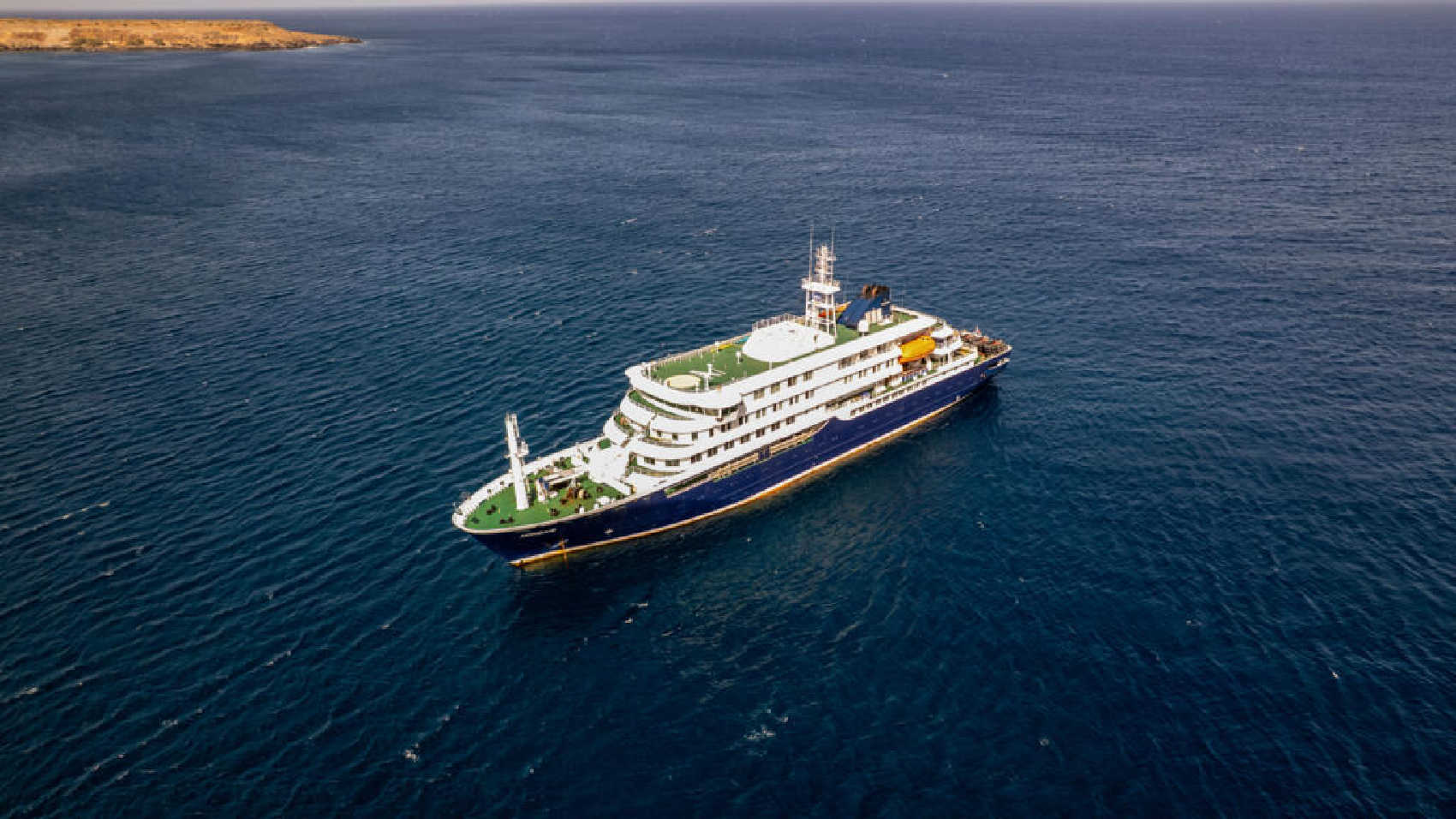
The MV Hondius, a Netherlands-based polar expedition cruise ship.
Three people have died and three others are ill following a suspected hantavirus outbreak aboard the MV Hondius, a Netherlands-based polar expedition cruise ship in the Atlantic Ocean, according to the World Health Organization and health authorities involved in the response.

WHO said one case of hantavirus infection has been laboratory confirmed, while five additional cases are suspected. Of the six affected individuals, three have died and one is in intensive care in South Africa. The agency said it is supporting the response and coordinating with national authorities and the ship’s operators as the investigation continues.
The MV Hondius, operated by Oceanwide Expeditions, had departed Argentina about three weeks earlier with around 150 passengers and made stops in Antarctica and other locations while traveling toward Cape Verde. The vessel was off Cape Verde as authorities and the operator worked through medical response and evacuation arrangements.
According to South Africa’s Department of Health, the first person who died was a 70-year-old man who became ill during the voyage. His body was removed in Saint Helena, a British territory in the South Atlantic. His wife later collapsed at an airport in South Africa while attempting to return to the Netherlands and died at a nearby hospital. A third person also died, and Oceanwide Expeditions said the body of that individual remained aboard the ship.
A British national who became ill after the ship left Saint Helena was transferred to South Africa and was being treated in intensive care in Johannesburg, according to South African authorities cited in multiple reports. Two other symptomatic individuals remained aboard the ship and required urgent medical care, according to Oceanwide Expeditions.
Cape Verdean authorities had not granted permission for medical disembarkation, the cruise operator said, though local health officials had assessed those showing symptoms. Oceanwide Expeditions said Dutch authorities had agreed to lead a joint effort to repatriate two symptomatic individuals from Cape Verde to the Netherlands, along with the body of the person who died onboard, subject to local authorization.
WHO said further testing and epidemiological investigations are underway. “Detailed investigations are ongoing, including further laboratory testing and epidemiological investigations,” the organization said. The agency also said medical care and support were being provided to passengers and crew, and that sequencing of the virus was ongoing.
Hantaviruses are a family of viruses that can cause serious illness and death. Health authorities say people are most often infected through exposure to rodents, particularly their urine, droppings and saliva. The Centers for Disease Control and Prevention says hantavirus can cause hantavirus pulmonary syndrome, which affects the lungs, and hemorrhagic fever with renal syndrome, which affects the kidneys.
The CDC says hantavirus pulmonary syndrome can begin with symptoms such as fatigue, fever and muscle aches, and can later progress to coughing, shortness of breath and fluid buildup in the lungs. There is no specific treatment for hantavirus infection, and care is supportive, including oxygen and intensive medical support when needed.
WHO said it was working with authorities and the ship’s operators on a full public health risk assessment and support for those still onboard. South Africa’s National Institute for Communicable Diseases was also conducting contact tracing in the Johannesburg region to determine whether others may have been exposed.


Advertisements