

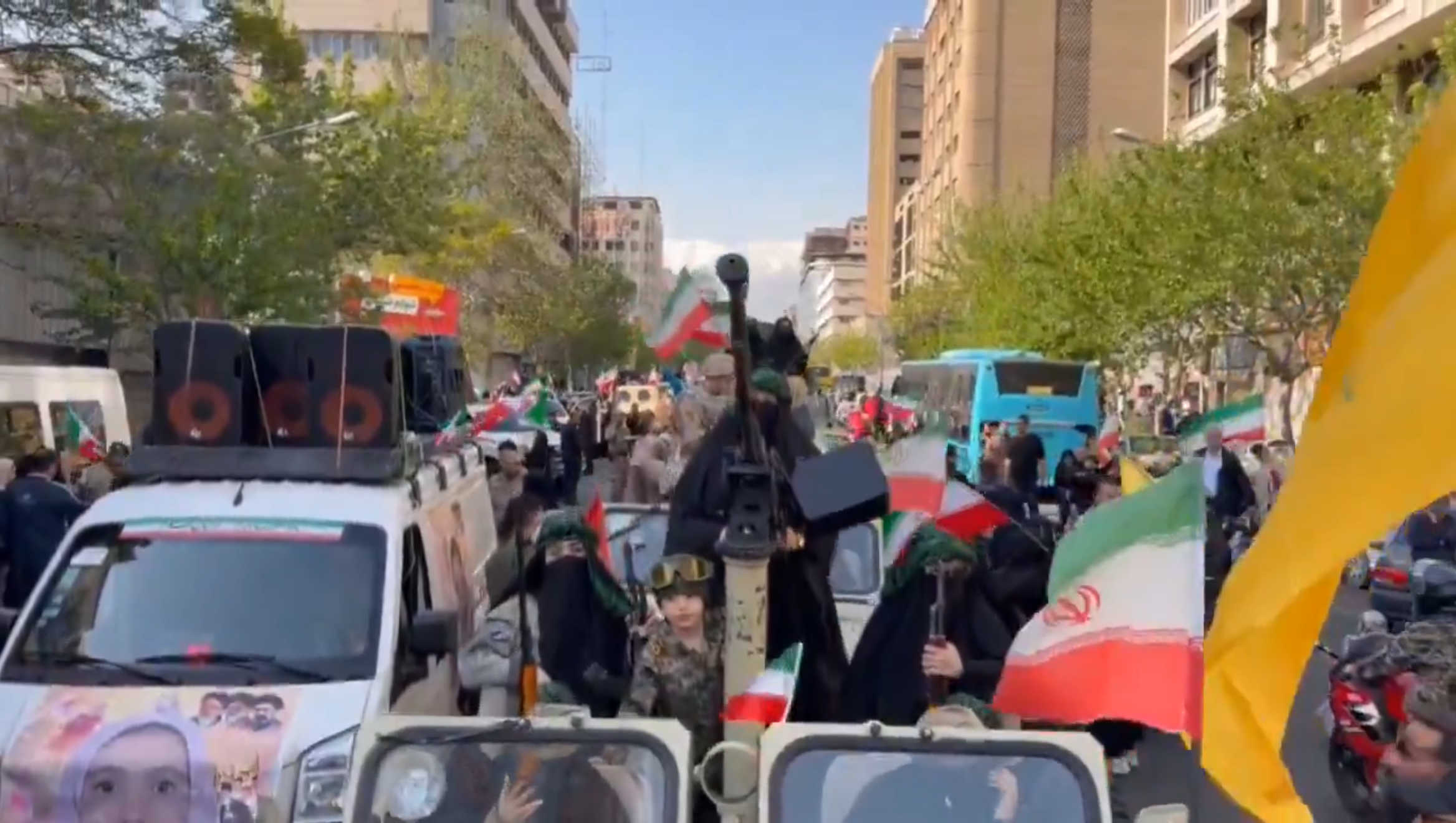
Women in Tehran take part in the “Dedication to the Homeland” campaign, waving Iranian flags as they move through the city in a pro-government rally during the war.
Whatever relief followed Iran’s brief reopening of the Strait of Hormuz did not last. After signaling Friday that commercial traffic could move again, Tehran said Saturday that the waterway had returned to its previous state under “strict management and control” by the armed forces, blaming Washington for keeping its blockade on Iranian ports in place. The reversal quickly turned dangerous: AP reported that Iranian gunboats fired on a tanker, while Reuters reported that at least two merchant vessels said they were hit by gunfire as they attempted to cross the strait.

The change came only a day after markets had responded to Iran’s earlier reopening signal. Brent crude fell about 9% on Friday and settled at $90.38 a barrel after Tehran said ships could pass during the ceasefire period. That drop reflected hopes that the worst-case Hormuz scenario might be easing. Saturday’s reversal, and the reports of gunfire, put that relief in doubt.
Iran’s military said it was restoring tighter control because the United States had not lifted its own maritime pressure. Tehran accused Washington of violating trust by maintaining the blockade, while Iran’s armed forces cited repeated U.S. violations and “piracy” under the guise of a blockade. Iran said it had earlier agreed, “in good faith,” to the managed passage of a limited number of tankers and commercial vessels after negotiations, but had decided to tighten control again.
The danger on the water underscored how fragile that brief opening had always been. The tanker fired upon near Oman was struck after the reclosure announcement. There has been no immediate comment from the United States on the latest incidents.
The renewed restrictions matter far beyond the Gulf. Before the war, the Strait of Hormuz carried about one-fifth of global oil trade, and even a partial disruption can quickly feed into shipping costs, fuel prices and wider inflation. Saturday’s reversal therefore left the ceasefire looking far more fragile than it had the day before.



Advertisements