

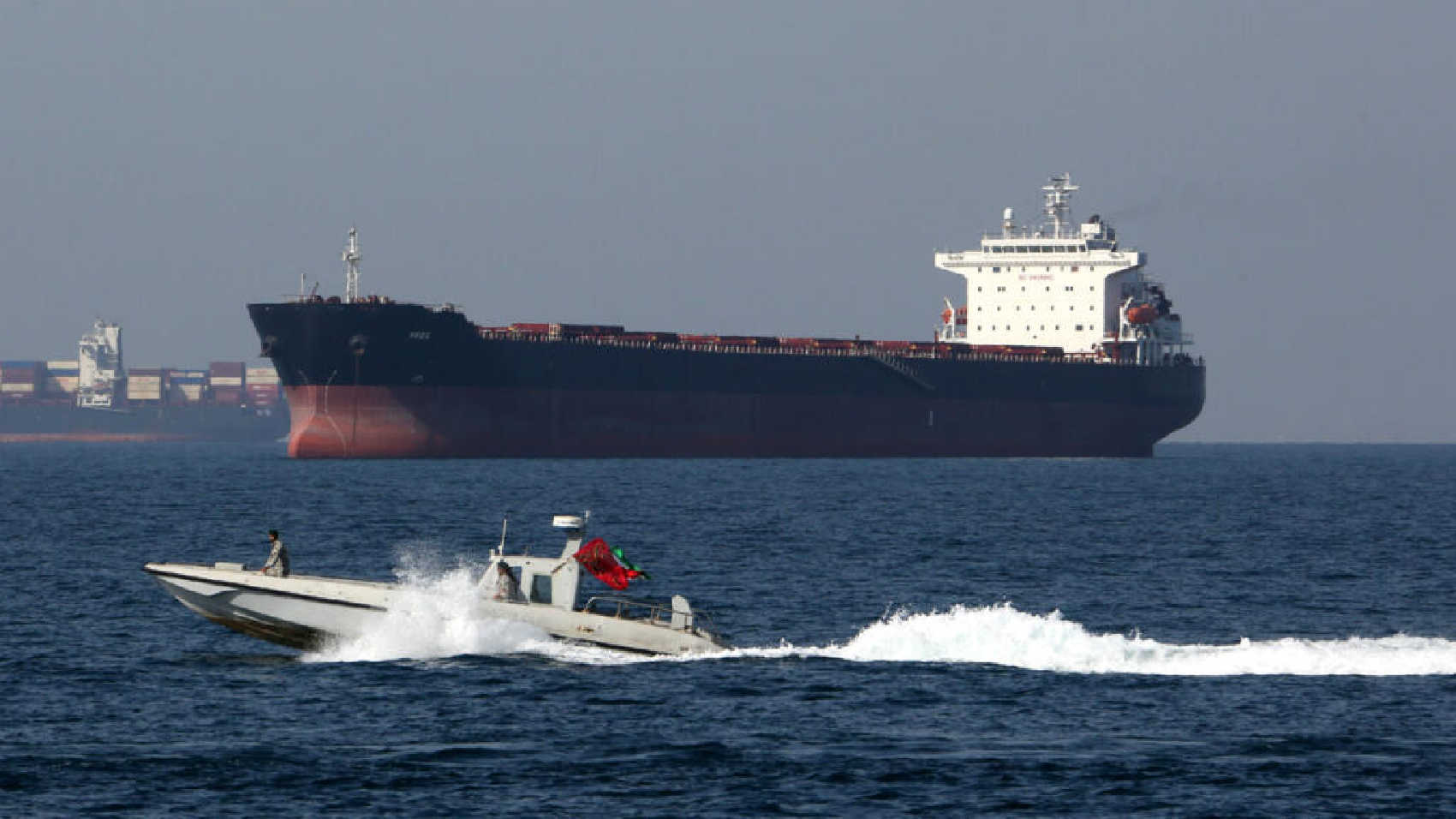
A large oil tanker moves through the Strait of Hormuz as a smaller Iran-flagged speedboat cuts across the foreground.
The newest development in the U.S.-Israel war against Iran is the return of a diplomatic opening, with several outlets reporting Friday that Washington and Tehran may resume talks as soon as this weekend, with both sides now aiming for a temporary arrangement to prevent the war from flaring again rather than a full peace settlement.

That shift helped pull Brent back below $100 after weeks of violent swings, but it did not erase the deeper strain running through shipping, aviation fuel and global energy markets.
That tentative opening is being helped by a separate pause on another front: a 10-day ceasefire between Israel and Lebanon which took effect Thursday evening, and may be extended by mutual agreement. Under the arrangement released by the U.S. State Department, Lebanon’s government is to act against Hezbollah and other non-state armed groups, while Israel is to refrain from offensive operations during the ceasefire period even as it retains a claim of self-defense against imminent threats. The truce matters because the Lebanon front had become one of the main ways the wider war was spilling outward and aggravating the oil shock.
The diplomatic track remains fragile because the biggest sticking points are still unresolved. The U.S. and Iran have narrowed their goals to an interim memorandum, but that sharp differences remain over enriched uranium, the length of any halt to enrichment activities, and the conditions for safer passage through the Strait of Hormuz.
Meanwhile, Defense Secretary Pete Hegseth used a Pentagon briefing on the Iran war to compare hostile media coverage to the Pharisees who sought to destroy Jesus. In a separate Pentagon prayer service, Hegseth led a prayer inspired by the fictional biblical passage made famous in Pulp Fiction, saying it had been shared with him by the combat search team that rescued a U.S. airman in Iran. The episode widened an already simmering clash between the administration and Pope Leo, who has criticized the war and warned against the abuse of Christian language.
Even with diplomacy back on the table, Iran’s leverage has not gone away. The country's use of Hormuz has created a tense new normal for Gulf energy by demonstrating both the willingness and the ability to choke one of the world’s most critical oil and gas corridors and to threaten infrastructure across the region. That is the core of Iran’s asymmetric power in this phase of the conflict: it does not need to match the United States conventionally to keep global markets under pressure.
That continuing leverage helps explain why markets have reacted so violently to every diplomatic hint and every military signal. Oil fell on optimism over renewed talks and the Lebanon ceasefire, yet remained elevated because the Strait of Hormuz has now been closed for seven weeks and roughly one-fifth of the world’s oil supply remains affected.

Outside the oil market, the strain is already hitting aviation. European airlines have urged the European Union to intervene as the war chokes jet-fuel supply, while Airports Council International Europe warned that the region could face a systemic shortage within three weeks if conditions do not improve. IATA has also warned that Europe is especially exposed because a large share of its jet fuel normally comes from the Persian Gulf and inventories cover only a little more than a month of demand.


Advertisements